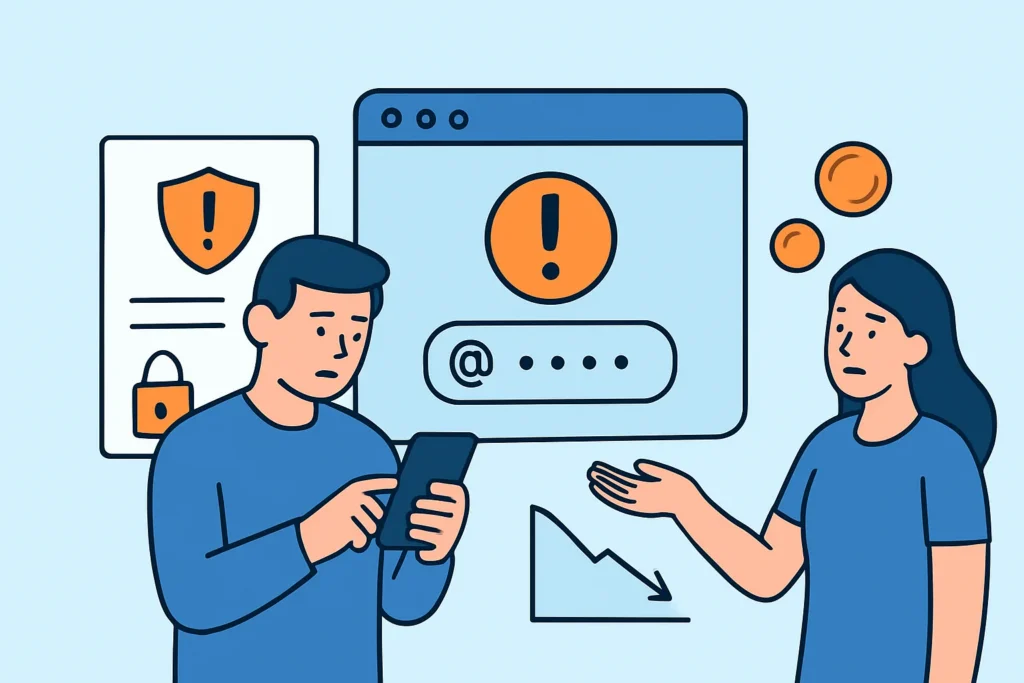
When customer credentials leak, the damage rarely ends with the password reset emails. Product owners, security leads and customer success managers usually want to know how a credential leak affects customer trust and churn over the following months, and what they can do in the first 72 hours to limit it. This article explains how trust erodes once leaked credentials surface, where churn actually shows up in the numbers, and which response decisions matter most.
Why Leaked Credentials Hurt Trust More Than Other Incidents
Most customers find a leaked table of order histories hard to picture. A leaked password feels personal. The customer starts thinking about every other account where they used the same password, and your company becomes the reason they spend an evening changing logins.
Credential leaks also come in a second wave. Once email and password pairs end up in a combolist, attackers try them against login pages for weeks. A customer who never received the first notification can lose their account a month later. To them, the breach “happened again”. This is why credential stuffing attacks do so much damage to how customers see a brand.
The 23andMe incident in 2023 shows the pattern clearly. Attackers used passwords reused from other breaches to log in to roughly 14,000 accounts directly. Through the DNA Relatives feature, they then reached data on about 6.9 million users. In its early statements the company focused on customers reusing passwords, and that framing was widely criticized. The breach was not the only reason for its bankruptcy filing in March 2025, but the loss of trust was plainly part of the story.
Where Churn Actually Shows Up After a Credential Leak
In consumer products, churn shows up quickly. Cancellations, app uninstalls and account deletion requests usually peak within 2-6 weeks of public disclosure. Subscription services tend to see a spike in downgrades as well, because customers stay but reduce what they put at risk.
B2B churn follows the renewal cycle. On annual contracts, the loss often appears 6-12 months later, and it rarely gets recorded as a security issue. The account manager logs “budget constraints” or “consolidating vendors”. In practice, the customer’s procurement team filled in a renewal security questionnaire that asked about incidents in the past 12 months, and the answer created friction.
A seasoned customer success lead does not wait for renewal data. They watch leading indicators instead: support ticket volume, failed login rates, NPS responses that mention security, slower sales deals, and how many customers turn on MFA on their own. A sudden rise in voluntary MFA enrollment is actually a good sign. It means customers are reacting, not leaving.
Consider a mid-sized B2B SaaS company with about 3,000 customer accounts. On Monday, threat intelligence flags a combolist shared in a Telegram channel that contains 1,200 email addresses on customer domains. By Tuesday, failed logins have tripled, and 40 accounts show successful sign-ins from residential proxy IPs. On Wednesday, customer success receives the first escalations. Suppose the team locks the 40 compromised accounts, forces resets for the other 1,160, and sends a plain-language notice by Thursday. The ticket spike typically settles within two weeks. Now suppose the team waits for full forensics before saying anything. Customers often hear about it first from their own SOC, and that is the moment trust breaks.
Myth: “It Wasn’t Our Breach, So It Won’t Cost Us Customers”
Many teams assume that if the credentials were stolen elsewhere, by an infostealer on a customer’s laptop or in another site’s breach, their own reputation is safe. Technically, their systems were not breached. Customers do not make that distinction.
The Snowflake-related incidents in 2024 are a good example. Attackers used credentials stolen by infostealer malware to get into customer instances that did not have MFA enforced. Snowflake’s own infrastructure was not reported as breached, yet headlines called it “the Snowflake breach” for months. Customers blame the brand whose login page let the attacker in, not the original source of the credential.
Response Steps That Protect Customer Trust
A fast, honest response protects retention far more than a perfect forensic report delivered three weeks later. An experienced incident lead usually works in this order:
1. Confirm within 24 hours that the leak is real, and match the leaked credentials against active accounts.
2. Contain the damage before communicating widely: invalidate sessions, force password resets on matched accounts and revoke API tokens.
3. Notify the affected customers directly in plain language, covering what happened, what you have already done and the one thing they need to do.
4. Make MFA easy to turn on immediately, and require it for admin roles.
5. Follow up 30 days later with what changed, including concrete controls and dates.
Step 3 is where most of the trust is won or lost. The guide on writing an effective data breach notification to customers covers the structure in detail. Under GDPR, if personal data in customer accounts was actually accessed, you may also need to notify the supervisory authority within 72 hours. That deadline should shape your timeline, not your tone.
Common Mistakes That Turn an Incident Into Churn
Blaming password reuse in public. Even when it is accurate, it sounds like dodging responsibility. Say clearly what your platform will change, such as rate limiting, breached-password checks against the Have I Been Pwned Pwned Passwords API, or mandatory MFA. Leave password hygiene advice to the customer guidance.
Forcing resets without explanation. A password reset email with no context, sent from a no-reply address, looks exactly like phishing. Customers ignore it or flood support asking whether it is real. Explain first, then send the reset.
Declaring victory at 30 days. Flat churn after a month means very little in B2B. Track the affected customer group as a separate cohort through at least one full renewal cycle. Compare their renewal rate and expansion revenue with unaffected accounts. The real cost of data breaches usually shows up in this delayed revenue, not in the first invoice from your incident response firm.
The usual advice also has exceptions. In banking and insurance, switching costs are high enough that churn stays low even when trust drops sharply. The damage shows up instead as lower product uptake and more complaints to regulators. For teams with fewer than 10 people and no dedicated customer success function, a personal message from the founder often works better than any template. In non-English markets, a machine-translated notice can do more harm than a short delay while a native speaker reviews it.
FAQ
How long does customer trust take to recover after a credential leak?
For consumer brands, sentiment usually levels off within 3-6 months if there is no second incident. B2B relationships take at least one renewal cycle, often 12-18 months, before account health scores return to where they were.
Should we notify customers if their credentials leaked from another company’s breach?
Yes, if those credentials work on your platform or match active accounts. A short, factual heads-up and a forced reset protect the customer, and most customers see a proactive warning as a reason to trust you.
Does enforcing MFA after a leak increase churn?
Rarely by much. Some low-engagement users will drop off, but customers who were directly affected usually welcome it. To limit friction, roll out MFA in phases, starting with admin and billing roles.
Summary
A credential leak affects customer trust less through the leak itself and more through how fast and how honestly you respond. Churn arrives in two waves: quick cancellations from consumers, and delayed non-renewals from business customers that rarely get labeled as security-related. Contain within 24 hours, notify in plain language, take responsibility for your own controls, and track the affected customers as a cohort for a full year. Teams that do this usually keep the customers who were most at risk of leaving.