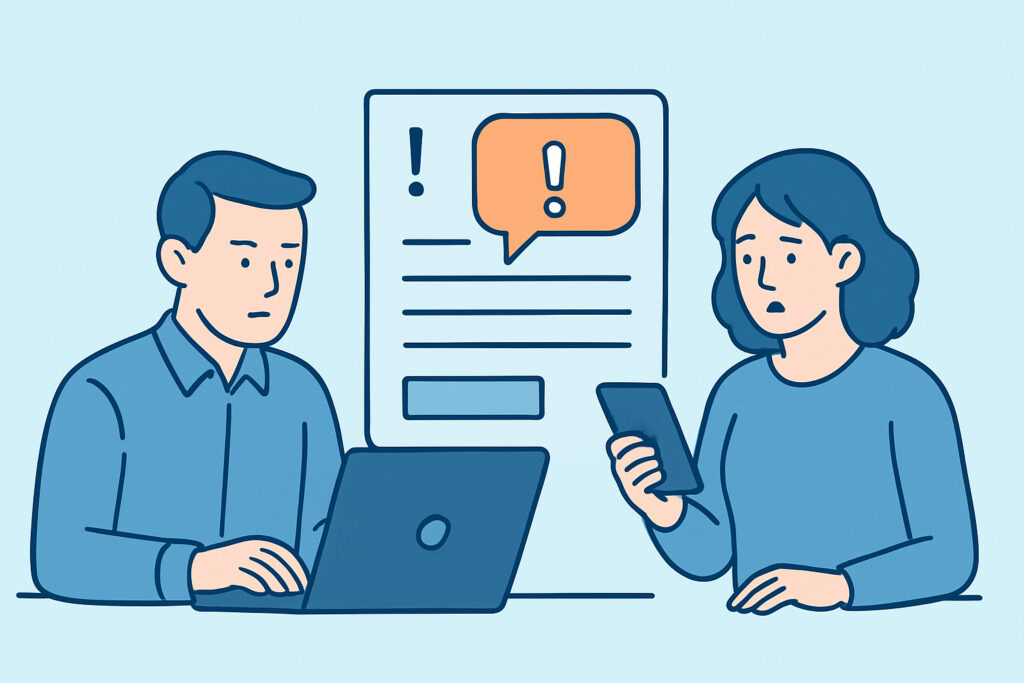
Writing an effective data breach notification to customers is one of the most consequential tasks a security team will face after an incident. Do it poorly and you compound the damage – losing customer trust, inviting regulatory scrutiny, and leaving people without the information they need to protect themselves. Do it well and it can actually strengthen your relationship with the customers affected.
Why Most Breach Notifications Fall Short
The instinct in the immediate aftermath of a breach is often to say as little as possible. Legal teams worry about liability. PR teams worry about headlines. The result is a notification that reads like it was written by a committee and contains almost no useful information for the person receiving it.
Customers receiving a vague “we take your security seriously” letter are left confused about what actually happened, whether they’re at risk, and what they should do. That confusion breeds distrust – often more than the breach itself would have.
Effective notification is specific, timely, and actionable. Those three qualities are harder to achieve than they sound.
Legal Baselines: What You Must Include
Before writing a single word, security and legal teams need to align on the regulatory requirements that apply. Under GDPR, breach notifications to affected individuals are required when the incident is “likely to result in a high risk” to their rights and freedoms. Similar thresholds exist under US state laws, HIPAA, and sector-specific regulations.
Regulatory reporting timelines also dictate how fast you need to move – GDPR’s 72-hour clock for notifying the supervisory authority is separate from, and often faster than, the window for notifying individuals. Know which rules apply to you before the incident happens, not during it.
The Elements Every Notification Must Cover
A well-structured customer notification answers five questions clearly.
What happened. Describe the incident in plain language. “An unauthorized third party accessed our database between March 4 and March 7” is better than “a security event occurred.”
What data was involved. Be specific about what categories of information were exposed – names, email addresses, passwords, payment details, health records. Vague references to “some personal information” are legally and practically inadequate.
What you have done. Describe the containment and remediation steps already taken. Customers want to know the breach is over, not ongoing.
What they should do. Give concrete, specific actions: change your password, enable two-factor authentication, watch your bank statements, place a fraud alert. Generic advice to “stay vigilant” is not enough.
Who to contact. Provide a real point of contact – a dedicated email address, a phone line, or a support page with actual humans behind it. A link to your generic FAQ page does not qualify.
Tone and Language: The Part Teams Get Wrong
Breach notifications are often over-lawyered into a passive, evasive tone that makes customers feel like they’re being managed rather than helped. “We deeply regret that this incident occurred” tells the reader nothing. “We failed to encrypt a backup file that should have been encrypted, and that file was accessed” is harder to write but far more credible.
Avoid language that subtly shifts responsibility onto the victim – phrases like “your credentials may have been compromised” place the problem at the reader’s feet. Write from the perspective of someone who caused harm and is trying to help fix it.
The notification also needs to be accessible. Plain language, short sentences, and a reading level appropriate for a general audience. If you’re sending to customers across multiple regions, consider whether translations are legally or practically required.
The Myth of the Quiet Notification
A persistent misconception is that sending a low-key notification – minimal detail, buried footer text, no press release – reduces reputational damage. The opposite is consistently true. When customers hear about a breach from a journalist or a third party before they hear from the company, the backlash is far worse than what a proactive, honest notification would have caused.
Leaked customer PII almost always surfaces eventually. Threat actors sell it, paste it, or use it in attacks that make the original breach traceable. Trying to minimize or delay notification is a short-term risk management instinct that creates long-term liability.
Timing: The Window Is Shorter Than You Think
Many organizations underestimate how quickly they need to act. Drafting notification templates before an incident occurs is one of the highest-value preparation steps a security team can take. A template covering the likely breach scenarios for your business – credential exposure, payment card data, health records – cuts response time significantly when you’re working against a regulatory clock.
Customer data exposure response plans should include pre-approved notification templates, a clear internal sign-off process, and a defined communication channel. If three departments need to approve every sentence during an active incident, you will miss your window.
Test that process before you need it. Run a tabletop exercise where your team has to draft and approve a notification under time pressure. The gaps that surface are worth knowing about in advance.
Handling Notifications When the Scope Is Still Unclear
A realistic challenge is that breach scope is often not fully known when regulatory deadlines arrive. You may not yet know exactly how many customers were affected or precisely what data was exposed.
The right approach is to notify based on what you know, state clearly that the investigation is ongoing, and commit to providing updates. Regulators generally respond better to transparent, timely communication with acknowledged gaps than to delayed notification waiting for certainty that may take weeks to achieve.
If the breach is large or complex, consider a phased communication approach: a first notification covering confirmed facts, followed by a detailed update once forensics are complete.
Frequently Asked Questions
Is there a legal deadline for notifying customers about a data breach?
Yes, in most jurisdictions. GDPR requires notifying the supervisory authority within 72 hours and affected individuals “without undue delay” when high risk is present. US state laws vary – some require notification within 30, 45, or 60 days. Sector-specific rules such as HIPAA have their own timelines. Confirm which laws apply to your business and the data involved before an incident occurs.
Should you notify customers even if you’re not sure whether their data was actually accessed?
In most cases, yes – if there is a reasonable likelihood of access. Regulatory frameworks typically use a risk-based threshold, not a certainty threshold. Erring on the side of notification and being transparent about uncertainty is generally the safer legal and reputational position.
What is the biggest mistake companies make in breach notifications?
Prioritizing legal protection over customer clarity. Notifications that hedge every statement, omit actionable detail, and avoid any direct acknowledgment of fault tend to generate more regulatory and reputational backlash than straightforward, honest communication. The goal of the notification is to help the affected person – not to limit corporate liability.
Summary
An effective data breach notification to customers is specific about what happened, honest about the organization’s role, and focused on giving the reader something actionable to do. The legal requirements set a floor – the notification that actually protects customer trust and limits long-term damage goes well above it. Draft your templates now, build your approval process before an incident, and when the time comes, communicate like the people affected deserve real information – because they do.