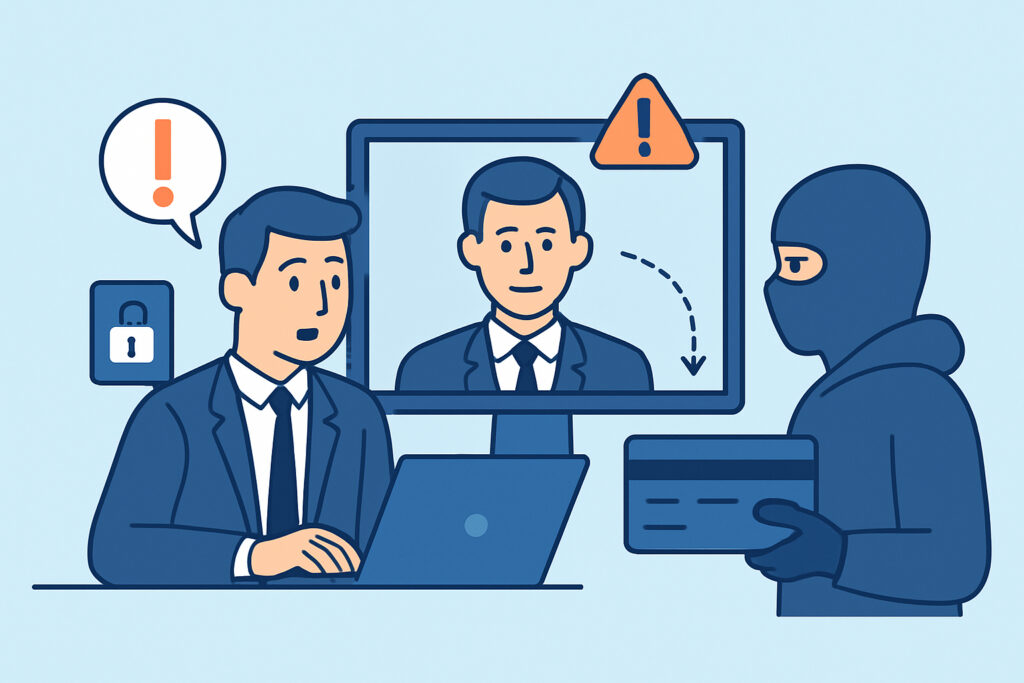
CEO fraud and deepfakes are converging into one of the most dangerous threat vectors facing organizations today. What used to require a spoofed email address and some convincing writing now takes a voice clone, a handful of leaked internal documents, and about 15 minutes of preparation. Finance teams are approving wire transfers to criminal accounts because the voice on the call sounds exactly like their CEO.
How Leaked Data Feeds Deepfake Attacks
Deepfakes don’t work in isolation. Before a threat actor clones a voice or generates a video, they do research – and that research almost always starts with leaked information.
Org charts pulled from data breaches reveal who reports to whom. Leaked emails expose writing style, recurring phrases, and how executives communicate internally. Internal Slack messages, shared carelessly in breached SaaS platforms, capture the casual tone a CEO uses with their direct reports.
Attackers who obtain org charts can identify the exact chain of command: which finance director is most likely to act on an urgent wire transfer request, who has authority to approve large payments without a secondary sign-off, and who is new enough to the role that they might not question unusual instructions.
What Makes Modern CEO Fraud Different
Classic business email compromise (BEC) relied on impersonating an executive via email – a method that still works but is increasingly caught by email security tools. The new wave combines multiple channels and adds synthetic media.
A typical attack pattern looks like this: a target employee receives an email that appears to come from the CEO, followed immediately by a WhatsApp or phone call where the voice matches the CEO exactly. The combination of written and audio confirmation creates a false sense of legitimacy that bypasses the skepticism a single channel might trigger.
Voice cloning requires surprisingly little source audio. Recordings from investor calls, conference presentations, or media interviews – all publicly available – can produce a convincing synthetic voice in under an hour using readily available tools. Add leaked information about internal processes and the impersonation becomes almost indistinguishable from the real thing.
The Leak-to-Attack Pipeline
Understanding the path from data leak to deepfake attack helps organizations know where to intervene.
Step 1 – Data collection: Attackers gather leaked credentials, org charts, internal documents, and email archives from breach databases, paste sites, and dark web markets.
Step 2 – Target identification: Using the org chart and email data, they map out who has financial authority and who their direct superior is.
Step 3 – Voice and persona preparation: Public audio of the executive is used to train a voice model. Leaked communications are used to craft the narrative – including the right jargon, project names, and internal references.
Step 4 – The attack: The target receives urgent instructions – often framed around a confidential acquisition, regulatory issue, or unexpected tax payment – and is told not to discuss it with colleagues.
Step 5 – Monetization: Wire transfers are initiated to accounts the attackers control. Recovery is rare once funds leave the organization’s banking system.
Leaked executive email accounts are particularly dangerous in this pipeline because they allow attackers to study communication patterns in detail – and in some cases, send actual emails from legitimate addresses.
A Common Myth Worth Addressing
There’s a widespread belief that deepfake CEO fraud is only a concern for large enterprises with high-profile executives. This is wrong.
Mid-sized companies and regional businesses are frequently targeted precisely because they tend to have weaker verification procedures, smaller finance teams where individuals carry more authority, and executives who are less protected by communication protocols. A $200,000 wire transfer fraud at a 50-person company is devastating in a way that the same amount wouldn’t be to a Fortune 500 firm.
The sophistication required to run these attacks has also dropped significantly. Criminal groups now offer deepfake-as-a-service tools on underground forums, meaning an attacker doesn’t need technical skills – just the leaked data to make the scenario believable.
Detection and Prevention That Actually Works
Technical controls matter, but the most effective defense starts with process.
Establish out-of-band verification: Any request for a wire transfer, change of banking details, or unusual financial action should require a callback to a pre-registered number – not a number provided in the suspicious message itself.
Create a code word system: Some finance teams use a rotating verbal code word that senior executives provide when making requests outside normal channels. A deepfake caller won’t know the word.
Limit public audio exposure: Executives who participate in investor calls, podcasts, or conference panels should be aware that every minute of audio is potential training data for a voice clone. This doesn’t mean going silent – but it changes the risk calculation.
Monitor for leaked internal data: If attackers don’t have your org chart, internal project names, and communication style, their attack becomes generic and easier to spot. Continuous data leak monitoring reduces the intelligence available to attackers before they launch.
Train employees on the pressure pattern: CEO fraud attacks almost always involve urgency, secrecy, and an appeal to authority. Employees who recognize this combination – regardless of how convincing the voice sounds – are the last line of defense.
What to Do When You Suspect an Attack Is Underway
Speed matters, but not the kind attackers want. The moment an employee suspects they’ve been targeted, the response should follow a clear sequence.
First, do not transfer funds – even if the call or message is still active. Second, hang up and contact the apparent sender through a verified, pre-existing channel. Third, alert the security team immediately so they can assess what internal data may have been used to construct the scenario.
If a transfer has already gone through, contact the bank within minutes – not hours. Banks have a narrow window in which they can attempt a recall. Document everything: screenshots, call logs, message threads. These records matter for insurance claims, regulatory reporting, and any law enforcement involvement that follows.
Frequently Asked Questions
Can deepfake audio really fool experienced finance professionals?
Yes, consistently. Documented incidents confirm that trained employees in high-pressure situations fail to detect synthetic voices, especially when the voice is combined with accurate internal context – which attackers obtain from previously leaked data. The realism gap between real and synthetic audio has narrowed to the point where it is no longer a reliable detection signal.
How do attackers find the right target within an organization?
Leaked org charts and internal directories are the most common source. These surfaces often appear in third-party breaches, misconfigured cloud storage, or compromised HR platforms. Knowing who holds financial signing authority is the first thing attackers establish before approaching anyone directly.
Is it possible to detect whether audio or video has been AI-generated?
Detection tools exist and are improving, but they consistently lag behind generation tools. Real-time detection during a live phone call is not yet reliable. Process-based controls – verification callbacks, code words, mandatory second approvals – remain more effective than technical detection alone.
Summary
CEO fraud enabled by deepfakes is not a future threat – it is happening now, and the quality of attacks is directly tied to how much internal information attackers can gather beforehand. Organizations that reduce their leaked data surface area make every subsequent stage of the attack harder to execute. The combination of strong verification procedures, employee awareness of pressure tactics, and proactive monitoring for exposed internal data is the most complete defense available today.