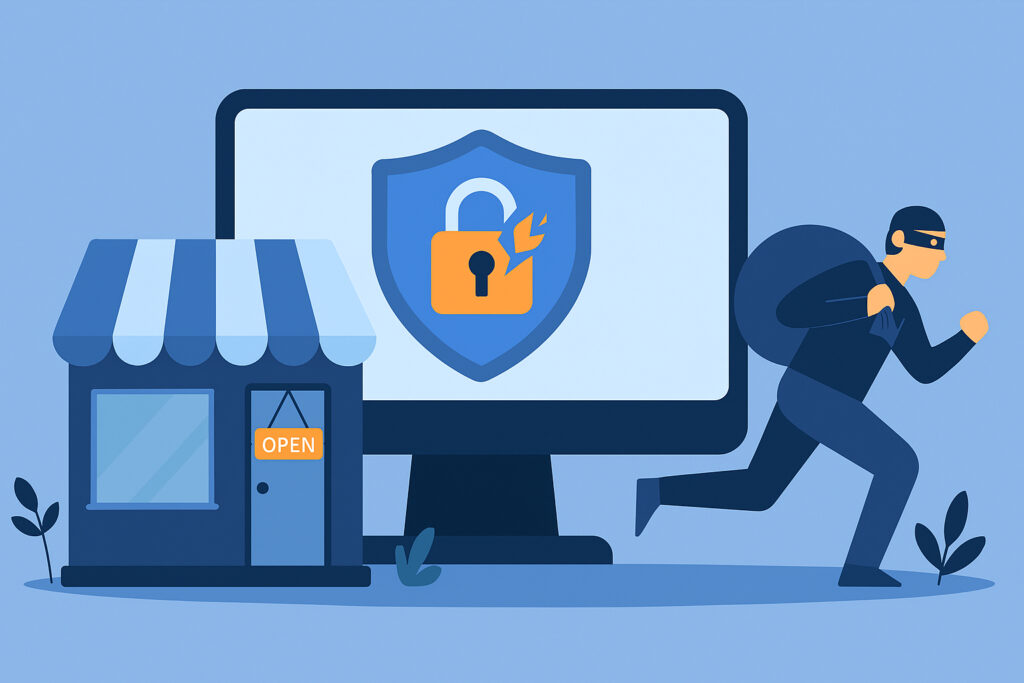
If you run a small business, you might think cybercriminals aren’t interested in you. After all, you’re not a Fortune 500 company with millions of customer records. But here’s the uncomfortable truth: small businesses are actually more attractive targets than large corporations. And the consequences of a data breach can be devastating for a company with limited resources.
I learned this lesson the hard way a few years back when a client of mine, a local accounting firm with just eight employees, had their client database compromised. They thought their antivirus software was enough protection. It wasn’t. The breach cost them three major clients, countless hours of remediation work, and nearly destroyed their reputation in the community.
The Numbers Don’t Lie
Recent studies show that over 40% of cyberattacks target small businesses, yet only 14% of small companies rate their ability to mitigate cyber risks as highly effective. That’s a dangerous gap. The average cost of a data breach for a small business ranges from $120,000 to $1.24 million, and 60% of small companies go out of business within six months of a cyberattack.
These aren’t just statistics. These are real businesses with real employees and families depending on them.
Why Criminals Love Small Businesses
Think of cybercriminals as burglars casing a neighborhood. They’re not always looking for the mansion with the most valuables. Often, they’re looking for the house with the unlocked door. Small businesses are that unlocked door.
First, there’s the lack of dedicated security resources. Large companies have entire IT security teams, penetration testers, and million-dollar security budgets. Small businesses often have one person wearing multiple hats, and cybersecurity might be their fifth priority on any given day.
Second, small businesses often use outdated or unpatched systems. When you’re focused on keeping the lights on and making payroll, updating software doesn’t always feel urgent. But those updates often contain critical security patches that criminals know how to exploit.
Third, and this is crucial, small businesses are often part of larger supply chains. Criminals use them as stepping stones to bigger targets. If you’re a vendor, supplier, or service provider to larger companies, your compromised system becomes a backdoor into theirs.
The Human Factor
Here’s something that took me years to fully appreciate: technology is rarely the weakest link. People are.
Small businesses typically have less formal security training for their staff. An employee might click on a phishing email that looks like it’s from your bank. Someone might use ”Password123” because it’s easy to remember. Another person might access company data from an unsecured coffee shop Wi-Fi network.
I once worked with a small marketing agency where an employee had been unknowingly forwarding sensitive client information to what they thought was a legitimate partner. The email address was off by one letter from the real partner’s domain. That single typo cost them a major client and resulted in legal complications that took months to resolve.
What Data Are They After?
You might think, ”We don’t have anything valuable.” But you’d be wrong.
Criminals want customer information like names, addresses, email addresses, and phone numbers. This data can be sold on the dark web or used for identity theft. They want financial data including credit card numbers, bank account details, and payment processing information. They want business credentials like login information for your company accounts, email passwords, and access to your financial systems.
Even your intellectual property has value. Client lists, proprietary processes, business strategies, and trade secrets can be sold to competitors or used for corporate espionage.
The Ransomware Reality
Ransomware attacks have become the weapon of choice for criminals targeting small businesses. The attack is simple: malware encrypts all your data, and criminals demand payment to unlock it. Small businesses often pay because they can’t afford downtime and may not have proper backups.
The average ransomware payment for small businesses is around $170,000, but the true cost includes lost business, recovery expenses, and reputation damage. And here’s the kicker: paying the ransom doesn’t guarantee you’ll get your data back. About 30% of companies that pay never recover their files.
Common Myths That Leave You Vulnerable
Let me bust some dangerous myths I hear constantly:
Myth: ”We’re too small to be targeted.” Reality: Your size makes you more attractive because you’re easier to breach.
Myth: ”Antivirus software is enough.” Reality: Modern threats require layered security approaches including monitoring, employee training, and incident response plans.
Myth: ”Cybersecurity is too expensive.” Reality: A data breach costs far more than prevention. Basic security measures are surprisingly affordable.
Myth: ”We’d notice if we were breached.” Reality: The average time to detect a breach is 207 days. Criminals can operate undetected in your systems for months.
Practical Steps You Can Take Today
You don’t need a massive budget to improve your security. Start with these basics:
Implement multi-factor authentication on all business accounts. This single step blocks over 99% of automated attacks.
Create and test regular backups of your critical data. Keep at least one backup offline and offsite.
Train your team to recognize phishing attempts. Run simple tests quarterly to keep security awareness fresh.
Keep all software and systems updated and patched. Enable automatic updates where possible.
Use a password manager and enforce strong, unique passwords for every account.
Monitoring Your Risk
One of the most overlooked aspects of small business security is knowing when your data has been compromised. You can’t fix a problem you don’t know exists. This means actively monitoring for signs that your business information has leaked into public databases, paste sites, or dark web forums.
The good news is that automated monitoring services can now handle this for you, alerting you the moment your company data appears in unexpected places. Early detection means you can respond quickly, change compromised credentials, and minimize damage before criminals have time to exploit the information.
Frequently Asked Questions
How do I know if my business has been compromised? Warning signs include unexpected system slowdowns, unfamiliar programs running, unauthorized account access attempts, and customers reporting suspicious communications supposedly from your company.
What should I do immediately after discovering a breach? Disconnect affected systems from the network, document everything, contact your cyber insurance provider if you have one, engage a cybersecurity professional, and notify affected customers and relevant authorities as required by law.
Is cyber insurance worth it for small businesses? Absolutely. Policies typically cost between $1,000 and $7,500 annually and can cover forensic investigations, legal fees, customer notification, and business interruption costs.
The Bottom Line
Being a small business doesn’t make you invisible to cybercriminals. It makes you vulnerable. But vulnerability doesn’t mean helplessness. With basic security measures, employee awareness, and proper monitoring, you can significantly reduce your risk and protect the business you’ve worked so hard to build.
The question isn’t whether you can afford to invest in security. It’s whether you can afford not to.