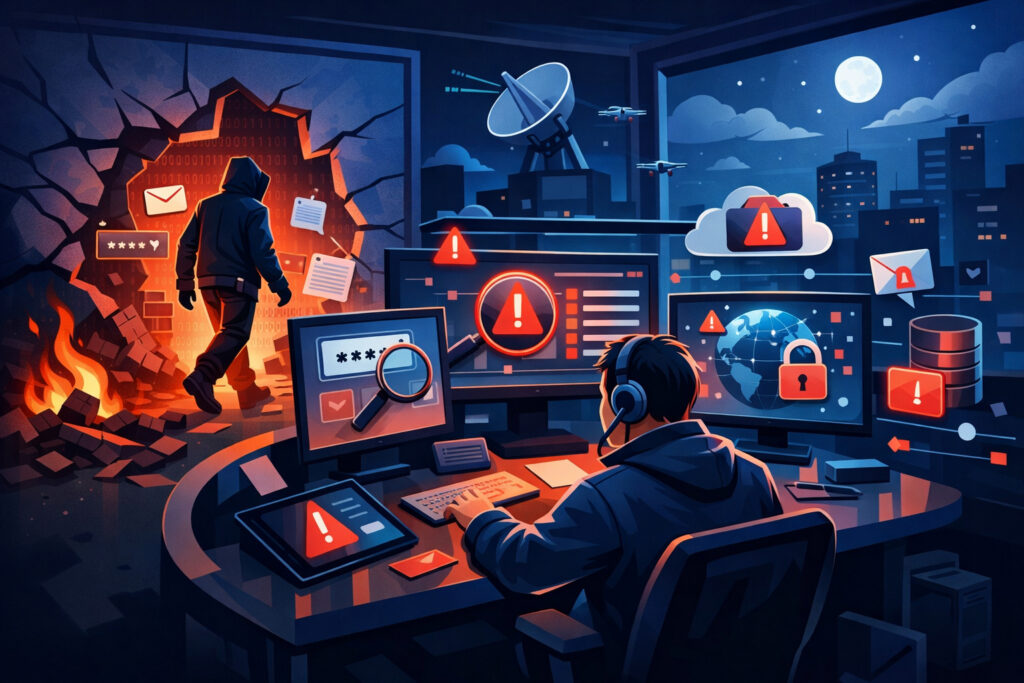
If you’ve just closed out a breach incident — patched the vulnerability, rotated credentials, notified affected parties — you might feel like the hard part is over. It isn’t. Continuing data leak monitoring after breach remediation is one of the most overlooked steps in incident response, and skipping it is exactly how organizations get hit twice. This article explains why post-remediation monitoring matters, what happens when you stop too early, and how to build a sustainable approach that actually protects your business long-term.
The Breach Is Closed, But Your Data Is Still Out There
Here’s the uncomfortable truth that many security teams learn the hard way: remediating the cause of a breach doesn’t undo the breach itself. Once your data — credentials, customer records, API keys, internal documents — has been exfiltrated, it takes on a life of its own. It gets copied, resold, repackaged, and redistributed across dark web forums, Telegram channels, and paste sites for months or even years after the original incident.
A scenario most incident responders will recognize: a company discovers that an employee’s credentials were exposed in a third-party breach. They force a password reset, enable MFA, and close the ticket. Six months later, those same credentials — bundled with thousands of others — surface in a fresh credential dump on a hacker forum. Attackers try them against the company’s VPN. If nobody’s watching, they get in.
The remediation addressed the immediate vulnerability. It did nothing about the data that was already in circulation.
Why Organizations Stop Monitoring Too Early
There’s a pattern I’ve seen repeatedly. After a breach, organizations spin up intense monitoring — daily checks, executive briefings, round-the-clock alerting. Then weeks pass with no new findings, the crisis energy fades, and leadership asks why they’re still spending resources on something that’s “resolved.” Monitoring gets scaled back or dropped entirely.
This is a mistake rooted in a common misconception: the myth that breach data has a short shelf life. In reality, stolen data circulates for far longer than most people assume. Research consistently shows that discovery timelines for breaches already stretch into months — and the resale and reuse timelines are even longer. Data from breaches that happened three or four years ago still appears in fresh compilations regularly.
The other factor is psychological. Once an incident is “closed” in the ticketing system, there’s institutional pressure to move on. But threat actors don’t operate on your project timeline.
What Post-Remediation Monitoring Actually Catches
Ongoing monitoring after remediation serves a fundamentally different purpose than the initial incident investigation. During the breach response, you’re trying to understand what happened and stop the bleeding. After remediation, you’re watching for secondary effects — and these are often more damaging than the original incident.
Here’s what continued monitoring typically surfaces:
Delayed data dumps. Attackers often sit on stolen data before publishing or selling it. A breach that happened in January might not produce a visible data dump until July. If you stopped watching in March, you’ll miss it entirely.
Credential reuse attacks. Even after you’ve rotated passwords internally, employees who reused those same passwords on personal accounts remain vulnerable. When those credentials appear in a new dump, attackers use them for credential stuffing against your systems.
Derivative leaks. Your data gets combined with data from other breaches to create enriched datasets. A leaked email address from your breach gets matched with a password from a different breach, creating a working credential pair you never knew existed.
Supply chain exposure. Your vendors and partners may have been affected by the same breach or may have received your data as part of normal business operations. Their security posture determines whether your data leaks again through a completely different channel.
Building a Sustainable Post-Remediation Monitoring Plan
The key word here is sustainable. You can’t maintain crisis-level intensity forever, and you shouldn’t try. What you need is a baseline level of automated monitoring that runs continuously without burning out your team.
Step 1: Define what you’re watching for. After remediation, shift your monitoring focus to the specific data types that were compromised — email domains, credential patterns, customer data formats, source code signatures. This is more targeted than general threat monitoring.
Step 2: Automate detection with real-time alerting. Manual checks don’t scale and they don’t last. Automated monitoring that scans paste sites, dark web forums, code repositories, and credential dumps around the clock is the only reliable approach. When a new exposure is detected, you need to know within minutes — not during next week’s security review.
Step 3: Set a monitoring timeline — then extend it. Most organizations that set a post-breach monitoring window choose 90 days. That’s a start, but it’s not enough. Based on historical breach data analysis, a minimum of 12 months is realistic. Many organizations find that once they’ve established continuous monitoring, the marginal cost of extending it indefinitely is negligible compared to the risk.
Step 4: Integrate findings into your incident response process. Post-remediation discoveries should feed back into your incident response playbook. Every new finding is an opportunity to refine your response procedures and close gaps you didn’t know existed.
The Real Cost of Stopping
Consider this: a mid-size company remediates a breach involving employee credentials. They monitor for 60 days, see nothing new, and stop. Eight months later, a credential stuffing attack succeeds because recycled credentials from the original breach appeared in a new compilation that nobody was watching for. The second incident costs more than the first — not just financially, but in trust, regulatory scrutiny, and the internal credibility of the security team.
The cost of continuous automated monitoring is a fraction of what a second incident would cost. It’s not even close.
FAQ
How long should post-breach monitoring last?
At minimum, 12 months from the date of remediation — not the date of discovery. Stolen data regularly resurfaces well beyond the 90-day window that many organizations default to. If your monitoring is automated, there’s little reason not to continue indefinitely.
What data sources should post-remediation monitoring cover?
Focus on the channels where breach data typically resurfaces: dark web marketplaces, paste sites, hacker forums, Telegram channels, public code repositories, and credential dump databases. Automated services that cover multiple sources simultaneously provide much better coverage than manual spot checks.
Is post-remediation monitoring required by regulations like GDPR?
While GDPR doesn’t explicitly mandate ongoing monitoring after remediation, it does require organizations to implement appropriate technical measures to protect personal data — and regulators have increasingly interpreted this to include proactive breach detection. Demonstrating continuous monitoring strengthens your compliance posture significantly if a second incident occurs.
Don’t Let a Closed Ticket Create a False Sense of Security
Breach remediation is a milestone, not a finish line. The data that left your organization during a breach doesn’t disappear when you close the incident report. It circulates, gets repackaged, and gets weaponized on timelines you don’t control. Continuous, automated monitoring after remediation is the only reliable way to catch secondary exposures before they become secondary incidents. The organizations that understand this don’t just recover from breaches — they come out more resilient.