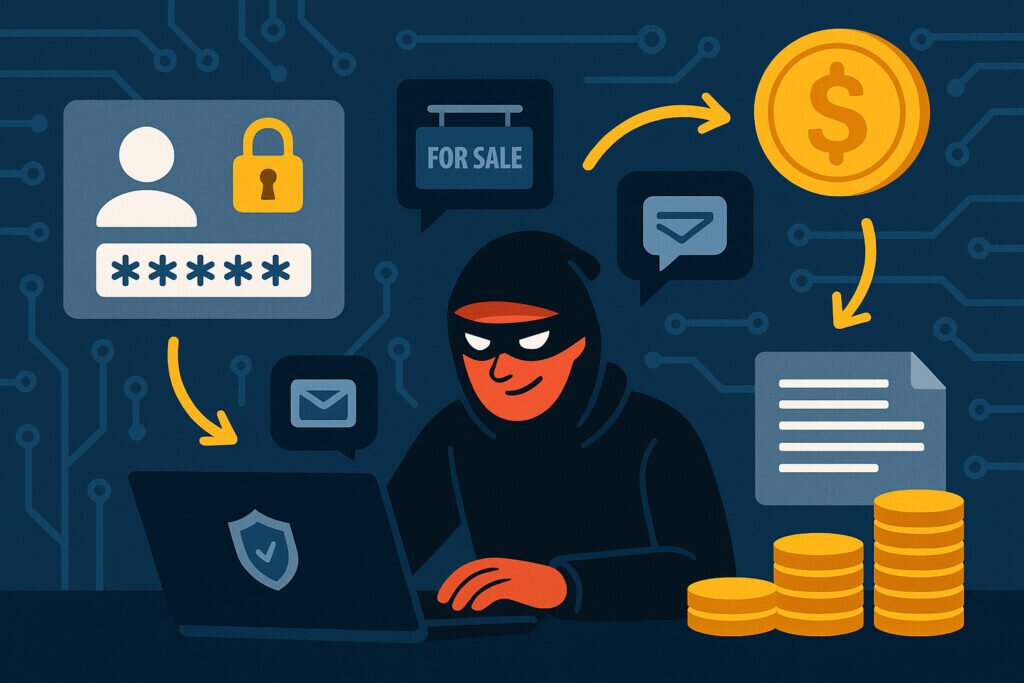
When your company’s credentials end up in the wrong hands, it’s not just about unauthorized access anymore. It’s about money—often substantial amounts of it. Cybercriminals have built entire underground economies around stolen corporate credentials, and understanding how they profit from this information is crucial for protecting your business. The faster you recognize the monetization patterns, the better you can defend against them and minimize potential damage.
The Underground Marketplace: Where Credentials Become Currency
Stolen corporate credentials don’t just sit idle on a hacker’s hard drive. They’re immediately valuable commodities in underground forums and dark web marketplaces. I’ve monitored these spaces for years while developing data breach monitoring systems, and the efficiency of these markets is genuinely alarming.
Corporate email and password combinations typically sell for anywhere from $10 to $200, depending on the company’s size and industry. Financial sector credentials command premium prices—sometimes reaching thousands of dollars for administrative access to banking systems. Healthcare credentials are particularly valuable due to the wealth of personal information they unlock.
The pricing structure is sophisticated. Sellers offer ”guarantees” that credentials are fresh and working. Some even provide customer support and replacement policies if the credentials have already been deactivated. It’s disturbingly professional.
Direct Financial Theft: The Obvious Path
The most straightforward monetization method is direct theft. When criminals gain access to corporate banking credentials, payment processor accounts, or financial management systems, they can initiate wire transfers, redirect payments, or drain accounts entirely.
Business Email Compromise (BEC) attacks are particularly lucrative. Criminals use stolen executive credentials to send legitimate-looking emails requesting wire transfers to new ”vendor” accounts. These attacks have cost businesses billions globally. The emails appear completely authentic because they’re sent from real executive accounts.
I’ve seen cases where attackers monitored email accounts for weeks, learning about ongoing transactions and company communication styles before striking. They wait for the perfect moment—often when executives are traveling or during busy periods when scrutiny might be lower.
Ransomware Deployment: Maximum Leverage
Valid credentials are the holy grail for ransomware operators. Instead of relying on phishing emails or exploiting vulnerabilities, they simply log in using stolen administrative credentials. This gives them time to map the network, identify critical systems, and disable backups before deploying ransomware.
The monetization here is direct: companies pay ransoms ranging from tens of thousands to millions of dollars. What makes credential-based ransomware attacks particularly dangerous is that attackers can maintain persistent access even after initial detection, creating ongoing extortion opportunities.
Some groups employ double extortion tactics—encrypting data while simultaneously exfiltrating it. They then threaten to publish sensitive information if the ransom isn’t paid, creating additional revenue streams from the same breach.
Data Exfiltration and Intellectual Property Theft
Corporate credentials unlock access to valuable intellectual property, trade secrets, customer databases, and proprietary research. Cybercriminals monetize this in several ways.
They sell complete databases to competitors or interested parties. Customer lists, financial records, and business strategies all have market value. I’ve tracked cases where stolen research data from pharmaceutical companies sold for six-figure sums to entities in countries with weaker intellectual property protections.
Some criminals establish ongoing relationships with corporate spies or competitors, providing regular updates and intelligence in exchange for recurring payments. This turns a one-time credential theft into a sustainable income stream.
Cryptocurrency Mining: The Silent Profit
Many people don’t realize that stolen corporate credentials often lead to unauthorized cryptocurrency mining. Attackers use company servers and computing resources to mine cryptocurrency, essentially stealing electricity and processing power.
This method is appealing because it’s less immediately obvious than other attacks. Companies might notice degraded performance or increased cloud computing bills, but the connection to credential theft isn’t always clear. The criminals profit continuously for as long as the mining operation remains undetected.
Credential Stuffing and Account Takeover Services
Cybercriminals use stolen corporate credentials for automated credential stuffing attacks against other services. Since many people reuse passwords, a corporate email and password combination often works on personal accounts, shopping sites, or other business platforms.
Some criminals operate ”account takeover as a service” businesses. They use stolen credentials to compromise accounts on various platforms, then rent or sell access to these accounts. This creates multiple revenue streams from a single set of credentials.
Extortion Without Encryption
Not all monetization requires ransomware deployment. Some criminals simply threaten to expose stolen data, disrupt operations, or publicly embarrass the company unless payment is made. This approach requires less technical sophistication and carries potentially lower legal risks than deploying malware.
They might threaten to contact customers directly, inform regulators of security failures, or leak embarrassing internal communications. The fear of reputational damage alone often convinces companies to pay.
Building Botnet Networks
Compromised corporate systems become valuable nodes in botnet networks used for DDoS attacks, spam campaigns, or distributed computing tasks. Criminals rent out botnet capacity to other criminals, creating passive income from stolen credentials.
Corporate systems are particularly valuable for botnets because they typically have high bandwidth, powerful processors, and are less likely to be immediately detected compared to compromised home computers.
FAQ: Common Questions About Credential Monetization
How quickly do criminals monetize stolen credentials?
Often within hours. Automated systems immediately test credentials and list working ones for sale. Time is critical because companies may detect breaches and reset credentials.
Can criminals profit from old or outdated credentials?
Yes. Even expired credentials provide valuable information about company email formats, user patterns, and can be used in social engineering attacks. They also help criminals refine future attacks.
How do I know if my company’s credentials are being sold?
Monitoring dark web marketplaces and breach databases is essential. Services like LeakVigil continuously scan these sources and alert you when your company’s information appears.
Protecting Your Business
Understanding monetization methods helps you implement better defenses. Multi-factor authentication makes credentials less valuable to criminals. Regular monitoring for leaked credentials allows quick response before monetization occurs. Employee training reduces the initial credential theft risk.
The credential theft economy isn’t disappearing—it’s growing more sophisticated. But companies that understand how criminals profit can better protect themselves and respond effectively when breaches occur. Your credentials have real monetary value to criminals. Protect them accordingly.