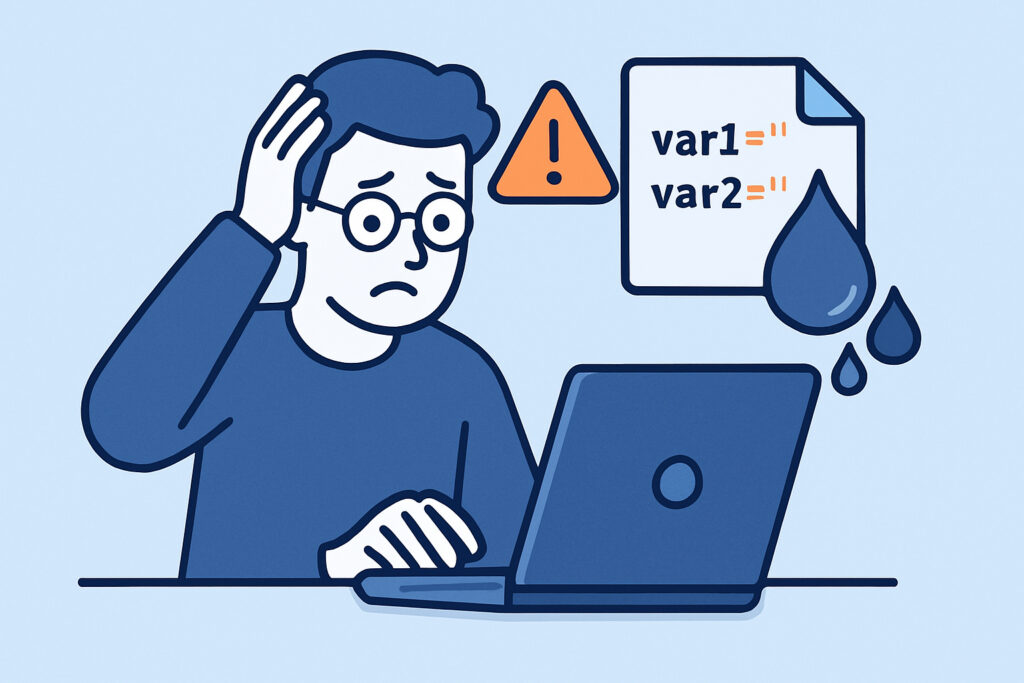
Environmental variables exposed in public repositories, configuration files, and deployment logs represent one of the most overlooked yet dangerous threats to organizational security. These seemingly innocuous text strings often contain database passwords, API keys, and authentication tokens that provide direct access to critical systems. Understanding the common developer mistakes that lead to environmental variable exposure helps security teams implement effective monitoring and prevention strategies.
The challenge extends beyond simple human error. Development workflows, CI/CD pipelines, and container deployments create multiple opportunities for sensitive environmental variables to leak into public spaces. Security teams need comprehensive visibility into where these exposures occur and how attackers exploit them.
The Hidden Danger in Development Workflows
Environmental variables serve as the bridge between application code and system configuration. Developers use them to store database connection strings, third-party service credentials, encryption keys, and OAuth tokens. The convenience factor makes them attractive – but also dangerous.
A typical scenario involves a development team working on a microservices architecture. They store database passwords, Redis connection strings, and payment processor API keys in .env files for local development. During a rushed deployment, someone commits the entire project directory to a public GitHub repository, including the .env file.
Within hours, automated scanning tools used by threat actors identify the exposed credentials. The damage timeline is often swift: database access within 6 hours, data exfiltration within 24 hours, and potential ransomware deployment within 48 hours.
Most Common Environmental Variable Mistakes
The first major mistake involves storing production credentials in version control. Developers often start with sample .env files containing real credentials for testing, then forget to sanitize them before committing code. Git’s history preservation means even “deleted” credentials remain accessible in previous commits.
Docker configuration presents another vulnerability vector. Dockerfile instructions like ENV or docker-compose.yml files frequently contain hardcoded secrets. When organizations push these images to public registries or share configuration files, they expose everything needed for system access.
CI/CD pipeline logs create unexpected exposure paths. Build systems often echo environmental variables during execution, logging them in plaintext. These logs get stored in cloud platforms, shared with team members, or archived in systems with broader access permissions than intended.
Configuration management tools add complexity. Ansible playbooks, Terraform files, and Kubernetes manifests often embed environmental variables directly in templates. When these infrastructure-as-code files reach public repositories, they expose not just individual credentials but entire system architectures.
Why Traditional Security Measures Miss These Exposures
Many organizations believe their firewall and endpoint protection provide adequate security coverage. This represents a fundamental misunderstanding of environmental variable exposure risks. These leaks bypass traditional perimeter security entirely because they occur in public spaces outside organizational control.
Standard vulnerability scanners focus on software dependencies and known CVEs. They rarely analyze environmental variable usage patterns or detect when credentials appear in unexpected contexts. AWS credentials in public repos demonstrate how cloud-specific credentials require specialized detection approaches.
Code review processes typically emphasize functionality over security hygiene. Reviewers check business logic but may overlook environmental variable handling, especially in configuration files outside the main application codebase.
Detection and Monitoring Strategies
Effective environmental variable monitoring requires scanning multiple data sources simultaneously. Public code repositories, container registries, configuration sharing platforms, and paste sites all serve as potential exposure points.
Automated scanning should target specific patterns: database connection strings, API key formats, JWT tokens, and cloud service credentials. The scanning logic must account for various encoding methods, as developers sometimes base64-encode or hex-encode sensitive values.
Real-time monitoring provides crucial advantage over periodic scanning. Python scripts for custom data leak monitoring workflows can supplement commercial tools with organization-specific detection logic.
Search operators help identify exposures across different platforms. GitHub searches using terms like “company_name password”, “api_key production”, or specific database hostnames often reveal unexpected credential exposures.
Immediate Response Actions
When environmental variable exposure occurs, speed determines damage scope. The first priority involves credential rotation – changing all potentially exposed passwords, API keys, and tokens immediately.
Contact the hosting platform to request content removal. GitHub, GitLab, and similar platforms provide mechanisms for removing sensitive data, though the exposure may have already been cached or archived elsewhere.
Audit system logs for unauthorized access attempts. Look for login attempts from unusual geographic locations, API calls with exposed keys, and database connections from unfamiliar IP addresses. This forensic analysis helps determine whether the exposure was actively exploited.
Review related systems for lateral movement indicators. Exposed credentials often provide access to additional systems through shared service accounts or interconnected applications.
Prevention Through Development Process Changes
Template repositories provide an effective starting point. Create standardized project templates with proper .env.example files, .gitignore configurations, and documentation about environmental variable handling.
Pre-commit hooks offer automated protection. Tools like git-secrets, detect-secrets, or custom scripts can scan commits for credential patterns before they reach repositories.
Secret management services eliminate the need for plaintext environmental variables. AWS Secrets Manager, Azure Key Vault, HashiCorp Vault, and similar tools provide secure credential storage with audit trails and automatic rotation.
Container security practices require special attention. Use multi-stage builds to separate development dependencies from production images. Leverage runtime secret injection instead of baking credentials into container images.
Frequently Asked Questions
How quickly do attackers typically find exposed environmental variables?
Automated scanning tools monitor public repositories continuously, often detecting new credential exposures within minutes of publication. High-value targets like AWS keys or database credentials get identified and exploited within hours rather than days.
Can deleting a file from GitHub completely remove exposed credentials?
No. Git preserves complete history, making deleted credentials accessible through previous commits. Even after deletion, the credentials may have been cached by search engines, archived by third parties, or already harvested by threat actors. Immediate credential rotation remains essential.
Do private repositories eliminate environmental variable exposure risks?
Private repositories reduce exposure but don’t eliminate it entirely. Developer account compromises, misconfigured permissions, and accidental public sharing can still expose credentials. Additionally, private repository logs, backups, and integrations may have different access controls than expected.
Environmental variable exposure represents a growing threat vector that requires dedicated monitoring and prevention strategies. The combination of automated scanning, proper development workflows, and rapid incident response helps organizations minimize their exposure to this often-overlooked security risk.