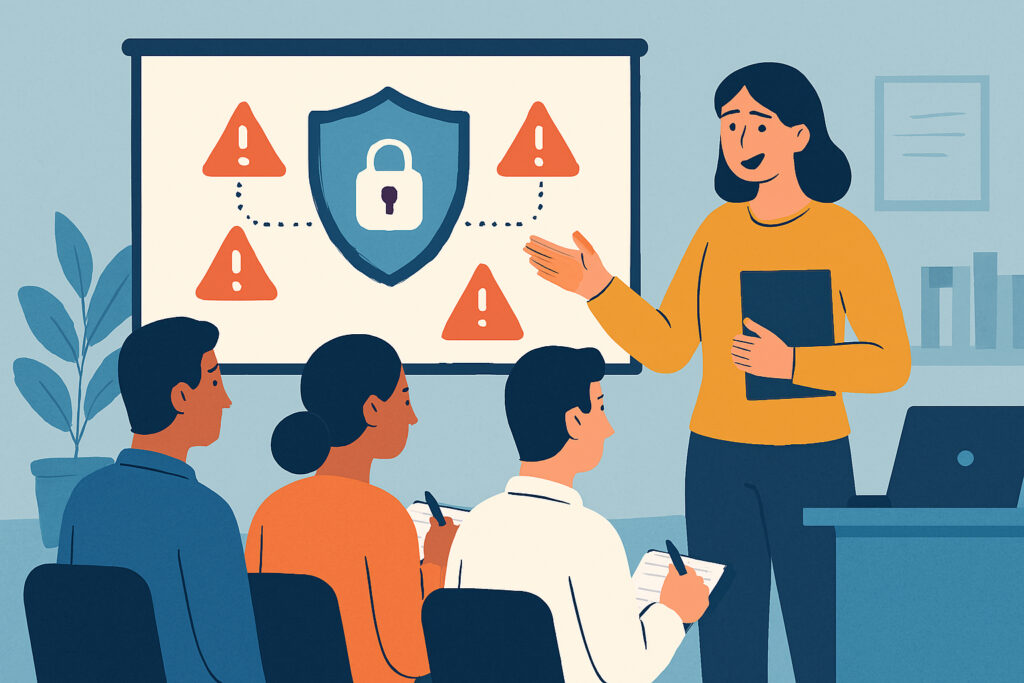
If you run a business of any size, you probably spend a decent amount on firewalls, endpoint protection, and monitoring tools. That makes sense. But here is something that might keep you up at night: the majority of data leaks don’t start with a sophisticated hacker breaking through your perimeter. They start with someone on your team making a simple mistake. A misdirected email, a file shared with the wrong permissions, a password reused across ten different services. No amount of technology alone will fix that.
This article is for business owners, IT managers, and team leads who want to understand why employee training matters so much and how to actually do it well.
Why Technology Alone Is Not Enough
There is a common misconception that investing heavily in security software will cover all your bases. Tools like automated leak monitoring, which is exactly what we built LeakVigil to do, are essential for catching exposures early. But they work best as a safety net, not as your only strategy.
Think of it this way. You can install the best alarm system in your house, but if someone leaves the front door wide open every night, the alarm is just going to keep going off.
I learned this the hard way a few years back. A client’s credentials ended up on a public paste site. After investigating, it turned out an employee had tested a login flow using real production credentials and accidentally committed them to a public GitHub repository. No malware, no phishing. Just a moment of carelessness that a ten-minute conversation about handling sensitive data could have prevented.
What a Good Training Program Looks Like
Forget those once-a-year compliance slideshows that everyone clicks through as fast as possible. Here is what actually works.
Start with a baseline assessment. Before you train anyone, find out where your team stands. Run a simulated phishing test or a short quiz. You need to know where the gaps are and have something to measure progress against.
Make the first session about real consequences. People tune out abstract threats. Show them real examples of companies that suffered breaches because of human error. When people understand what is actually at stake, they pay attention.
Cover the basics thoroughly. Every employee should understand how to recognize phishing emails, why password reuse is dangerous, what data counts as sensitive, how to share files securely, and who to contact when something seems off.
Tailor training to specific roles. A developer needs to know about secrets management. A sales rep needs to understand safe handling of customer data in CRM tools. A finance team member needs awareness of invoice fraud. One-size-fits-all training misses the mark.
Run regular refreshers. Quarterly sessions and monthly phishing simulations keep awareness high. The goal is not to catch people out but to keep the topic alive in their minds.
Create a Culture Where People Report Mistakes
This is where most companies fail. You can train people perfectly, but if they fear punishment for mistakes, they will hide them instead of reporting them. And a hidden mistake turns into a full-blown incident.
Create a clear, no-blame reporting process. When someone clicks a suspicious link or shares something they shouldn’t have, the first response should be ”thank you for telling us,” not ”how could you be so careless.” Speed matters enormously. The faster you know about a potential exposure, the faster you can contain it.
This is where LeakVigil complements your training perfectly. Even with the best trained team, mistakes happen. Automated monitoring catches what human awareness misses, scanning public and semi-public sources continuously so you find out in hours rather than months.
Common Myths About Security Training
Myth: Only technical staff need training. Non-technical employees are often the most targeted because attackers assume they are less aware. Everyone from reception to the CEO needs a baseline understanding.
Myth: Training is a one-time event. People forget and threats evolve. Regular updates are not optional.
Myth: Good tools make training less important. Tools and training are complementary, not interchangeable.
Things You Can Do This Week
Set up a dedicated channel for reporting suspicious activity. Send your team a short article about a real breach caused by human error. Review who has access to what, because excess permissions are one of the most common risk factors. Enable two-factor authentication everywhere possible. And sign up for a leak monitoring service so you have a safety net for exposures you might not discover on your own.
Frequently Asked Questions
How often should we train employees? A thorough session once a year with quarterly refreshers at minimum. Monthly phishing simulations are ideal if your team can handle the frequency.
Is training necessary for small companies? Absolutely. Small companies are often targeted because attackers expect weaker defenses, and a single leak can be proportionally devastating.
How do we measure whether training works? Track phishing simulation click rates over time, monitor voluntary security reports, and compare incident rates before and after your program.
Final Thoughts
Your employees are not your weakest link. With the right training, they become your strongest asset. Combine that human awareness with automated monitoring through LeakVigil, and you have a defense strategy that actually holds up in the real world. Start small, stay consistent, and make it safe for people to speak up when something goes wrong.