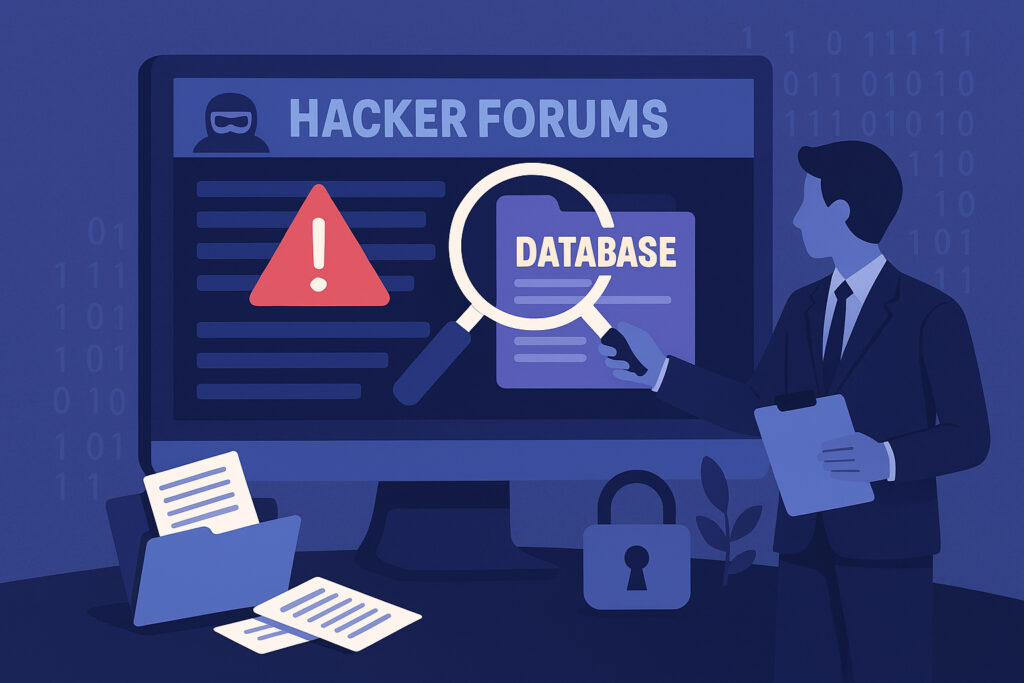
If you’ve ever wondered whether your company’s sensitive information might be floating around on dark web forums or underground marketplaces, you’re not alone. Database dumps – massive collections of stolen credentials, customer records, and internal data – are traded and shared on hacker forums every single day. The scary part? Most companies have no idea their data has been leaked until it’s too late.
Understanding how these dumps appear, where they’re shared, and how to identify your own company’s data can mean the difference between catching a breach early and dealing with a full-blown crisis months down the line.
What Exactly Are Database Dumps?
A database dump is essentially a snapshot of an entire database, usually stolen through SQL injection attacks, compromised credentials, or insider threats. These dumps contain everything from usernames and passwords to email addresses, payment information, and private customer data.
Hackers share these dumps for various reasons – sometimes for profit, sometimes for reputation within their communities, and occasionally just to cause chaos. The dumps are typically formatted as SQL files, CSV spreadsheets, or plain text documents containing thousands or even millions of records.
Where These Dumps Actually Surface
Database dumps don’t just appear randomly on the regular internet. They’re shared in specific places that require some knowledge to access. Hacker forums like RaidForums (now defunct but replaced by similar sites), BreachForums, and various Russian-language forums are common distribution points. Some dumps appear on paste sites like Pastebin or specialized leak sites. Others circulate on Telegram channels or encrypted messaging groups.
I remember checking one of these forums about two years ago after hearing rumors about a retail company’s breach. Within fifteen minutes, I found three different database dumps from companies in the same industry, all posted within the previous month. The casual way these massive privacy violations were being shared was genuinely unsettling.
Recognizing Your Company’s Data in a Dump
Spotting your own company’s data requires systematic monitoring, but there are telltale signs to watch for. First, look for domain-specific email patterns. If your company uses @yourcompany.com email addresses, searches for that domain across forums and paste sites can reveal dumps containing your data.
Second, watch for mentions of your company name in forum posts. Hackers often announce dumps with titles like ”CompanyName Database – 500K Users” or similar attention-grabbing headlines. Third, monitor for unique identifiers that only your company would use – specific customer ID formats, internal product codes, or proprietary field names that appear in your databases.
Step-by-Step: How to Check for Your Data
Start by using specialized search engines like Have I Been Pwned, which aggregates known breaches and lets you search by email domain. While this won’t catch everything immediately, it’s a solid first step.
Next, set up automated monitoring for your company domain across major paste sites. Tools like PasteLert can alert you when your domain appears in new pastes. For more comprehensive monitoring, you’ll need to access forums directly – though this requires careful legal consideration and often specialized tools.
Check samples of dumps when they’re posted. Many hackers post small samples publicly before selling the full database. These samples often contain enough information to verify whether the dump is legitimate and whether it includes your company’s data.
What the Data Actually Looks Like
When you find a dump, it typically includes structured data in rows and columns. You might see fields like: username, email, password (often hashed, sometimes in plaintext), registration date, last login, IP address, and various other fields depending on what was stored in the original database.
Password hashes are particularly important to recognize. If you see strings like ”$2a$10$N9qo8uLOickgx2ZMRZoMye” or similar cryptographic-looking text, those are bcrypt hashes. MD5 hashes look like ”5f4dcc3b5aa765d61d8327deb882cf99”. The hashing method matters because it determines how easily those passwords can be cracked.
Common Myths About Database Dumps
Myth 1: ”If passwords are hashed, we’re safe.” Not true. Weak hashing algorithms like MD5 can be cracked in seconds. Even stronger hashes can be vulnerable if users chose weak passwords.
Myth 2: ”Only big companies get targeted.” Small and medium businesses are actually more frequent targets because they often have weaker security measures.
Myth 3: ”We’d know immediately if we were breached.” Most breaches go undetected for months. The average time to detect a breach is still over 200 days in many industries.
Taking Action When You Find Your Data
If you discover your company’s data in a dump, act fast. First, verify the authenticity – not all posted dumps are real. Check sample records against your actual database structure and data formats.
Once verified, immediately force password resets for all affected accounts. Notify affected customers or employees within your legal timeframe requirements. Investigate how the breach occurred and patch the vulnerability. Consider whether you need to involve law enforcement or regulatory bodies depending on the data type and your jurisdiction.
Prevention Is Still Your Best Defense
Rather than constantly checking forums for dumps, implement proper security from the start. Use strong encryption, implement multi-factor authentication, regularly audit database access, keep systems patched, and monitor for unusual database queries or export activities.
But even with perfect security, supply chain attacks and third-party breaches can still expose your data. That’s why continuous monitoring matters. Automated tools can watch for your company’s digital footprints across thousands of sources 24/7, alerting you the moment something suspicious appears.
The reality is that database dumps will keep appearing on forums as long as databases exist. Your job isn’t to stop all breaches everywhere – it’s to know as quickly as possible when your data appears so you can respond before the damage multiplies.