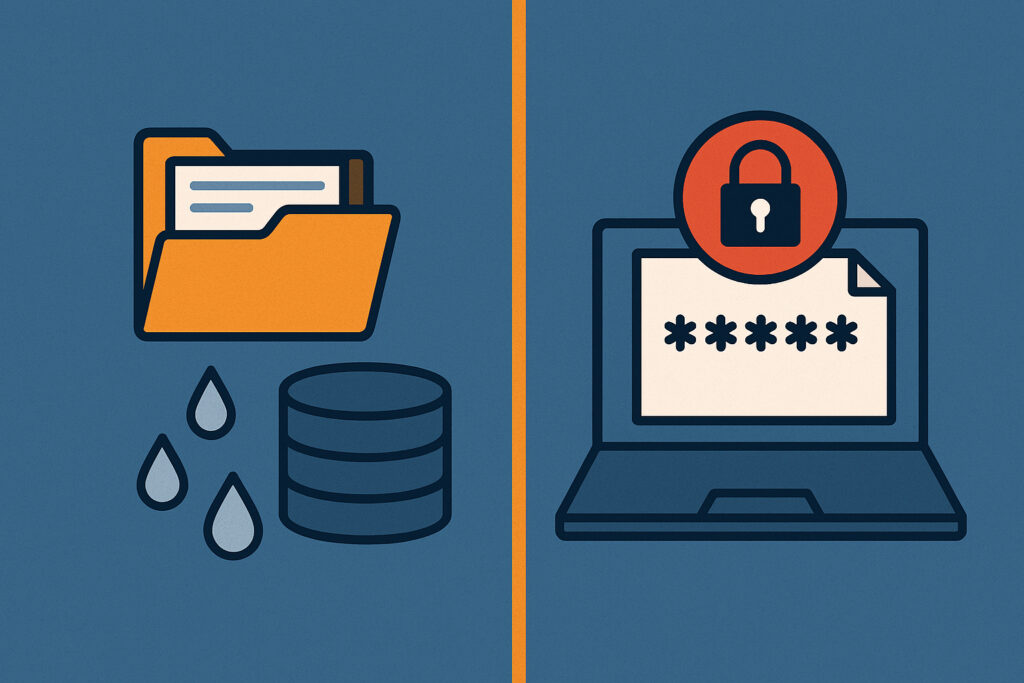
If you’ve ever received a notification about your data being compromised, you might have wondered whether it was a leak or a breach. These terms often get used interchangeably in news headlines and corporate announcements, but they’re actually quite different. Understanding this distinction matters because it affects how you should respond, what risks you face, and what preventive measures actually work.
The confusion is understandable. Both situations involve your sensitive information ending up where it shouldn’t be. But the path that information takes, the intent behind it, and the solutions needed are completely different. Let me break this down in a way that makes practical sense.
What Actually Is a Data Breach?
A data breach is an intentional, unauthorized access to a system or database. Think of it as someone breaking into your house. There’s a deliberate actor, usually with malicious intent, who finds a way past your security measures. They might use stolen passwords, exploit software vulnerabilities, or deploy sophisticated hacking techniques.
The key word here is intentional. Someone actively tried to get your data. They might be after credit card numbers, personal information, trade secrets, or anything else of value. These attackers often spend weeks or months inside a system, quietly gathering information before anyone notices.
I remember when a client discovered their database had been compromised. The attackers had been inside for three months, methodically copying customer records. The company only found out when stolen credit card data started appearing on dark web marketplaces. That’s the scary part about breaches – the damage often happens long before detection.
Understanding Data Leaks
A data leak, on the other hand, is unintentional exposure of information. Nobody deliberately attacked your systems. Instead, data became accessible due to misconfiguration, human error, or inadequate security practices. It’s like leaving your front door unlocked rather than having someone break in.
Common causes include misconfigured cloud storage buckets, accidentally public databases, exposed API endpoints, or employees inadvertently sharing sensitive files. The data just sits there, publicly accessible, waiting for someone to stumble upon it or actively search for it.
The distinction might seem subtle, but it’s crucial. With a leak, there’s no break-in, no exploitation of vulnerabilities, just information sitting in the wrong place with the wrong permissions.
Why the Difference Matters
Understanding whether you’re dealing with a leak or breach changes everything about your response strategy. With a breach, you need to assume attackers have actively targeted specific valuable data. They’ve likely copied it, and you need to work backward to understand what was accessed and when.
With a leak, the exposure might be broader but less targeted. You need to determine how long the data was accessible and whether anyone actually found it. Just because data was exposed doesn’t mean it was discovered or exploited.
The legal implications differ too. Many data protection regulations distinguish between these scenarios. A breach often triggers more stringent reporting requirements because it involves malicious intent. Some jurisdictions have specific timelines for breach notifications that don’t apply to leaks.
Real-World Examples That Illustrate the Difference
Let’s look at concrete examples. The 2017 Equifax incident was a classic breach. Attackers exploited a known vulnerability, gained access to the network, and systematically extracted data on 147 million people over several months. This was targeted, intentional, and sophisticated.
Contrast that with the numerous Amazon S3 bucket exposures we’ve seen. Companies configure storage buckets with public access, often during development or testing, then forget to lock them down. The data just sits there publicly accessible. That’s a leak – no malicious actor required, just a configuration mistake.
Detection Challenges
Breaches are often harder to detect because attackers actively try to hide their presence. They use sophisticated techniques to avoid triggering security alerts. Average detection time for breaches can be months, and sometimes victims only learn about it from external sources or law enforcement.
Leaks can be equally hard to spot but for different reasons. Since there’s no suspicious activity to detect, organizations often don’t realize data is exposed until someone points it out. Security researchers regularly scan the internet for exposed databases and notify companies, which is often the first time they learn about the problem.
Prevention Strategies Differ Significantly
Preventing breaches requires robust security measures: strong authentication, network segmentation, intrusion detection systems, regular security audits, and employee training about phishing and social engineering. You’re defending against active attackers who will probe for weaknesses.
Preventing leaks focuses more on configuration management, access controls, regular permissions audits, and ensuring development practices don’t accidentally expose production data. It’s about maintaining proper data hygiene and catching misconfigurations before they cause problems.
Common Myths to Bust
Myth 1: Small companies don’t get breached, only leaked. Wrong. Attackers often target smaller organizations specifically because they have weaker security. Size doesn’t determine risk type.
Myth 2: Leaks aren’t as serious as breaches. Tell that to companies whose entire customer databases ended up publicly searchable. The impact can be just as severe.
Myth 3: You can always tell which happened. Sometimes it’s genuinely unclear. Data might be exposed through a leak, then discovered and exploited by an attacker, blurring the lines.
What Should You Do If You’re Affected?
If you receive notification about either scenario, act quickly. Change passwords immediately, enable multi-factor authentication everywhere possible, and monitor your accounts for suspicious activity. With breaches, assume attackers have your information. With leaks, the risk depends on how long data was exposed and who might have found it.
Consider placing fraud alerts or credit freezes if financial information was involved. Document everything – you might need it later for identity theft claims or legal purposes.
Frequently Asked Questions
Can a leak become a breach? Absolutely. If someone discovers leaked data and exploits it maliciously, the situation escalates. This is why even unintentional leaks need immediate attention.
Are leaks less dangerous than breaches? Not necessarily. An exposed database containing millions of records is just as compromised whether someone broke in or the door was left open.
How long does data typically stay exposed in leaks? It varies wildly, from hours to years. Some misconfigured systems have exposed data for multiple years before discovery.
Do I need to respond differently to each? Your immediate protective steps are similar, but understanding the type helps you assess ongoing risk and take appropriate long-term measures.
The bottom line is that whether your data was breached or leaked, it’s still compromised. But knowing the difference helps you understand what happened, how to respond appropriately, and what preventive measures will actually protect you going forward. Both require serious attention, just different types of vigilance.