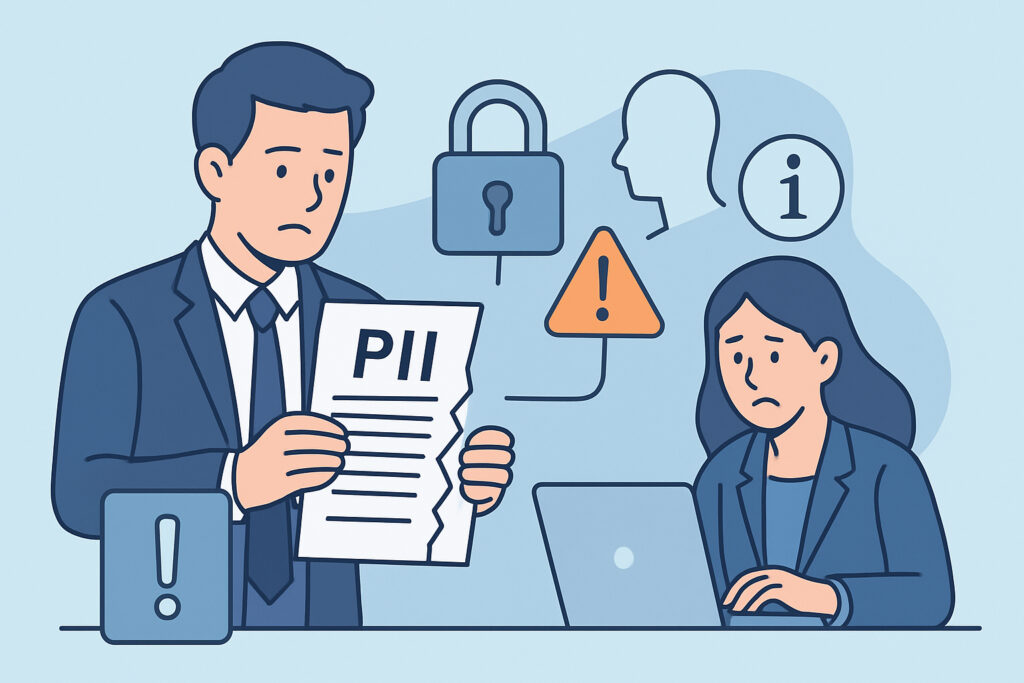
When customer personally identifiable information (PII) leaks, organizations face a complex web of legal obligations, regulatory fines, and potentially devastating reputational damage. This article examines the legal and reputational consequences of leaked customer PII, providing practical guidance for security professionals on prevention, response, and recovery strategies.
Understanding the Legal Landscape of PII Breaches
The legal implications of leaked customer PII vary dramatically depending on jurisdiction, industry, and the type of data involved. Under GDPR, organizations can face fines up to 4% of annual global turnover or €20 million – whichever is higher. In the United States, state breach notification laws create a patchwork of requirements, with some states mandating notification within 24 hours of discovery.
Healthcare organizations dealing with protected health information (PHI) face additional scrutiny under HIPAA. A single incident involving 500 or more records triggers mandatory reporting to the Department of Health and Human Services. Financial institutions must navigate multiple regulatory frameworks, including state banking regulations, federal oversight, and industry-specific requirements like PCI DSS for payment card data.
The notification timeline starts ticking the moment an organization becomes aware of a potential breach – not when they confirm it. This distinction has caught many organizations off-guard, leading to regulatory violations for delayed reporting even when the breach investigation was still ongoing.
Common Legal Misconceptions About PII Leaks
One dangerous misconception is that encrypted data breaches carry no legal obligations. While encryption can reduce regulatory penalties and legal liability, most jurisdictions still require breach notification if the encryption keys were also compromised or if the encryption is considered inadequate by current standards.
Another myth is that accidental exposures receive lighter treatment than malicious breaches. Regulators increasingly focus on whether organizations implemented adequate preventive measures, regardless of intent. A misconfigured cloud storage bucket exposing customer data can result in the same penalties as a targeted cyberattack if proper security controls were absent.
Many organizations also assume that third-party breaches absolve them of responsibility. In reality, data controllers remain liable for their vendors’ security failures. When a major cloud provider or payment processor suffers a breach affecting your customer data, you still face notification obligations and potential regulatory action.
Quantifying Reputational Damage
Reputational damage from leaked customer PII often exceeds immediate legal costs. Studies show that companies lose an average of 7.5% of their customer base within two years of a significant data breach. For subscription-based businesses, this translates directly to reduced recurring revenue and higher customer acquisition costs.
The impact varies significantly by industry. Healthcare and financial services organizations typically face more severe reputational consequences due to the sensitive nature of their data. Retail companies may recover faster, but e-commerce businesses often see immediate drops in online conversion rates as customers lose trust in their data handling practices.
Social media amplifies reputational damage exponentially. A single breach affecting a few thousand customers can generate millions of negative impressions when customers share their concerns online. The viral nature of breach news means that even well-handled incidents can cause lasting brand damage.
Immediate Response Requirements
The first 72 hours after discovering leaked customer PII are critical. Legal counsel should be engaged immediately to ensure privilege protection for the investigation. Many organizations make the mistake of conducting preliminary investigations without legal oversight, inadvertently creating discoverable documents that complicate later legal proceedings.
Breach notification requirements demand immediate attention. Create a notification matrix beforehand identifying specific regulators, law enforcement agencies, and other stakeholders who must be contacted. Each jurisdiction has different notification formats, timelines, and information requirements.
Customer communication requires careful balance between legal obligations and reputation management. Overly technical or legalistic language in breach notifications can increase customer anxiety and media attention. However, minimizing the incident or omitting required information can trigger additional regulatory violations.
Building Legal-Compliant Data Leak Monitoring Systems
Proactive monitoring demonstrates due diligence to regulators and can significantly reduce legal liability. Courts increasingly consider whether organizations had adequate monitoring systems in place when determining negligence in data breach cases. Organizations without monitoring capabilities face higher penalties and more severe legal consequences.
Automated monitoring systems should cover multiple data sources where customer PII might appear. Paste sites, forums, and dark web marketplaces frequently contain leaked customer databases before organizations become aware of breaches. Early detection through comprehensive monitoring can reduce notification timelines and demonstrate proactive security measures to regulators.
Documentation requirements for monitoring systems vary by jurisdiction. Some regulations require detailed logs of monitoring activities, while others focus on remediation capabilities. Ensure your monitoring solution provides audit trails that satisfy regulatory requirements in your operating jurisdictions.
Industry-Specific Considerations
Healthcare organizations face unique challenges with leaked customer PII. Patient privacy rights under HIPAA create additional notification requirements beyond general data protection laws. Medical identity theft can persist for years, requiring ongoing credit monitoring services and patient support programs that significantly increase breach costs.
Financial institutions must navigate complex regulatory relationships with multiple agencies. Banking regulators, consumer protection agencies, and law enforcement often have overlapping but different requirements for breach response. Coordination between these agencies can extend investigation timelines and increase compliance complexity.
E-commerce businesses face immediate business impact when customer payment information leaks. Payment card industry regulations can result in increased processing fees, mandatory security audits, and potential suspension of card processing capabilities. These consequences often prove more damaging than regulatory fines from privacy authorities.
Long-term Legal and Business Implications
Class action litigation frequently follows significant customer PII breaches. Even when immediate damages are minimal, plaintiffs’ attorneys argue for compensation based on increased identity theft risk and lost privacy. These cases can drag on for years, creating ongoing legal costs and reputational damage.
Regulatory investigations don’t end with initial breach notifications. Many privacy authorities conduct comprehensive audits of organizational security practices following breaches. These investigations can reveal additional compliance gaps and result in consent decrees requiring ongoing regulatory oversight.
Insurance implications extend beyond immediate breach response costs. Organizations with poor breach response histories face higher premiums and reduced coverage options. Some insurers now require continuous monitoring systems as a condition of coverage, recognizing their value in reducing claim severity.
Frequently Asked Questions
What constitutes customer PII under different privacy regulations?
The definition varies significantly between jurisdictions. GDPR uses a broad definition including any information that can identify an individual directly or indirectly. US state laws often have more specific definitions, with some focusing primarily on social security numbers, financial account information, and driver’s license numbers. Industry regulations like HIPAA and GLBA have their own specific definitions that may be broader or narrower than general privacy laws.
Can organizations avoid legal liability if they detect and report breaches quickly?
Fast detection and reporting can reduce penalties but don’t eliminate legal liability. Regulators consider quick response as a mitigating factor when determining fines, but organizations still face potential litigation and regulatory action. However, proactive breach response consistently results in lower overall costs compared to delayed or inadequate responses.
How long do legal obligations continue after a customer PII breach?
Legal obligations can extend for years after the initial breach. Some regulations require ongoing monitoring and reporting of breach-related incidents. Class action litigation can continue for three to five years. Organizations may also face ongoing regulatory oversight through consent decrees or settlement agreements that require regular compliance reporting.
Protecting Your Organization’s Future
Leaked customer PII creates legal and reputational risks that can persist for years after the initial incident. Organizations that invest in comprehensive monitoring, detailed response planning, and legal compliance frameworks position themselves to minimize both immediate and long-term consequences. The cost of prevention consistently proves lower than the combined legal, regulatory, and reputational costs of major PII breaches.
Success requires treating PII protection as a business-critical function rather than a compliance checkbox. Organizations that integrate legal requirements into their technical security controls and incident response procedures demonstrate the due diligence that regulators and courts expect in today’s threat landscape.