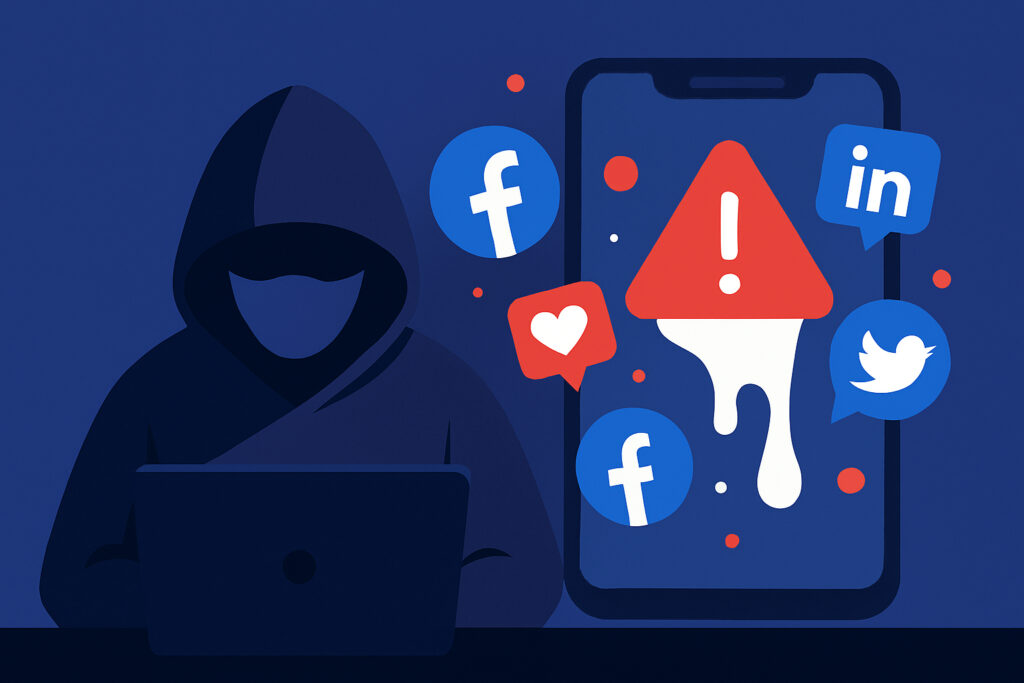
When most companies think about data breaches, they picture hackers breaking through firewalls or ransomware attacks. But there’s a quieter, more insidious threat that flies under the radar: social media data leaks. Every day, employees, contractors, and even executives inadvertently share sensitive corporate information on platforms like LinkedIn, Twitter, Facebook, and Instagram. These seemingly harmless posts can become goldmines for competitors, threat actors, and anyone looking to exploit your organization.
The problem isn’t just about one careless post. It’s the cumulative effect of hundreds of small data exposures across your workforce that creates a detailed map of your company’s operations, vulnerabilities, and strategic plans.
Why Social Media Leaks Are Different
Unlike traditional data breaches where hackers steal information, social media leaks happen voluntarily. An employee celebrates a new client win on LinkedIn, mentioning the client’s name and project scope. A developer tweets about solving a tricky bug, accidentally revealing details about your proprietary technology. A sales rep shares a photo from a company meeting where confidential roadmap slides are visible in the background.
I’ve seen this happen firsthand at a mid-sized tech company I consulted for. Their lead developer had been sharing technical challenges on Twitter to build his personal brand. Nothing seemed particularly sensitive in isolation, but when pieced together, these posts revealed the entire architecture of their upcoming product launch, including third-party integrations and timeline. A competitor connected the dots before we did.
What Actually Gets Leaked
The types of information that slip through social media are surprisingly diverse. Employee movements and organizational structure become public through LinkedIn updates and congratulatory posts. When someone announces they’re joining your security team or leaving your finance department, that’s intelligence about your internal operations.
Client and partner relationships get exposed through tags, mentions, and casual references. Even if contracts have NDAs, a simple “excited to be working with @CompanyX” post can reveal business relationships you’d prefer to keep quiet.
Product development and roadmaps leak through conference photos, hackathon posts, and GitHub activity. Developers love sharing their work, but those code snippets and architecture diagrams can telegraph your technical strategy months in advance.
Office locations and security details emerge from geotagged posts and casual office photos. That Instagram story from the new office might show badge readers, access control systems, or security desk layouts that shouldn’t be public knowledge.
The Real-World Consequences
These leaks create tangible business risks. Competitors gain market intelligence without spending a dollar on corporate espionage. They know your client roster, product timeline, and strategic direction just by monitoring your employees’ social feeds.
Social engineering attacks become far more effective when attackers have detailed information about your organization. They can craft convincing phishing emails that reference real projects, actual colleagues, and current initiatives, making their messages nearly indistinguishable from legitimate internal communications.
Regulatory and compliance issues arise when protected information gets shared publicly. Healthcare companies face HIPAA concerns, financial institutions worry about material non-public information, and defense contractors deal with ITAR violations, all because someone didn’t think before posting.
Why Traditional Security Measures Miss This
Your firewall won’t stop an employee from tweeting. Your DLP solution can’t monitor personal social media accounts. Your security awareness training probably covers phishing and password hygiene but rarely addresses the nuanced risks of social media oversharing.
Most companies don’t even know they have this problem because they’re not looking for it. Social media monitoring is often relegated to marketing and PR teams focused on brand reputation, not security teams hunting for data exposure.
How to Protect Your Organization
Start with social media policy development that’s actually enforceable and clear. Don’t just tell employees what not to share, explain why it matters and give concrete examples. Make it part of your onboarding process and refresh it annually.
Implement continuous monitoring of public posts mentioning your company, products, or key personnel. This isn’t about surveillance, it’s about visibility. Automated tools can scan social platforms for potential data leaks and flag posts that need review. The goal is early detection before a leak becomes a breach.
Create a response protocol for when leaks are discovered. Who gets notified? How quickly can you get a post removed? What’s the communication plan if sensitive information has already been widely shared? Having these answers ready makes all the difference.
Educate your team about the aggregation risk. One post about a new client isn’t necessarily a problem. But fifty posts over six months that collectively reveal your entire client acquisition strategy? That’s a serious leak. Help employees understand how seemingly innocuous information can be pieced together.
Common Misconceptions About Social Media Leaks
Many executives believe private accounts are safe. They’re not. Screenshots circulate. Connections aren’t always who they claim to be. And “friends only” settings don’t prevent data from spreading if someone in your network shares it further.
Another myth is that only large companies need to worry about this. Small and medium businesses are often more vulnerable because they lack dedicated security resources and their employees may not receive regular security training.
Moving Forward
Social media isn’t going away, and neither is the human tendency to share professional achievements online. The solution isn’t to ban social media or create a culture of fear. It’s about building awareness, establishing clear guidelines, and implementing monitoring systems that catch problems early.
Your employees are already your biggest asset. Make sure they’re not accidentally becoming your biggest vulnerability too.