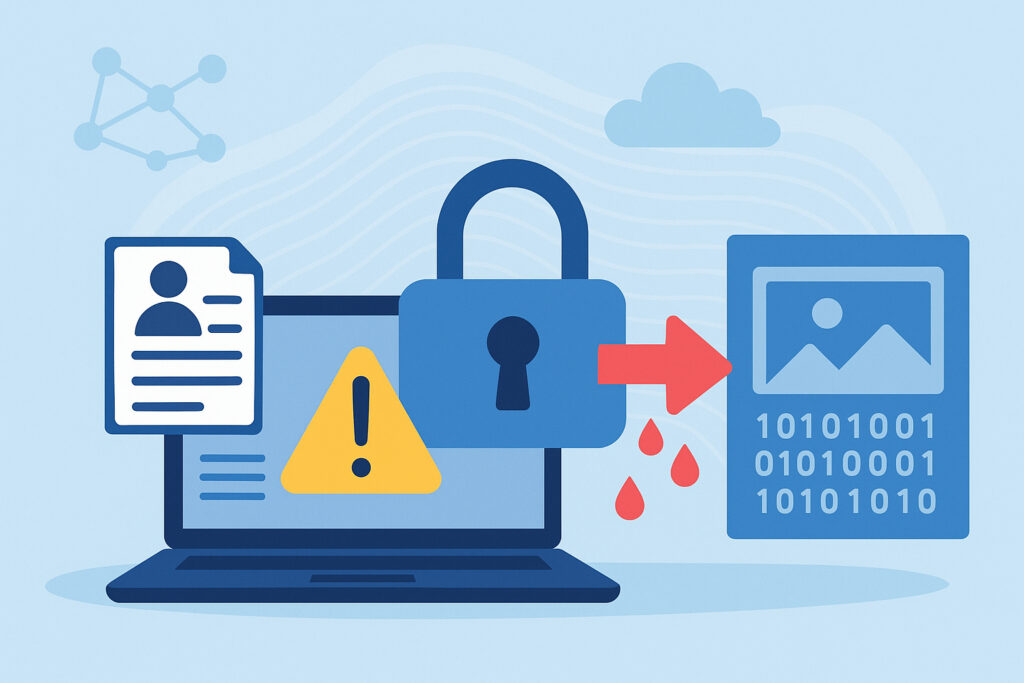
Let me tell you something that kept me up at night a few years back. A client of mine, a mid-sized software company, discovered that their entire customer database had been sitting on Pastebin for three weeks. Three weeks. They only found out when a security researcher contacted them directly. By then, the damage was done – competitors had the data, and their reputation took a serious hit. That’s when I really understood why data leak monitoring isn’t optional anymore.
What Exactly Is Data Leak Monitoring?
Data leak monitoring is essentially your digital watchdog. It continuously scans public and semi-public sources across the internet to detect if your company’s sensitive information has ended up somewhere it shouldn’t be. We’re talking about employee credentials, customer data, API keys, internal documents, source code – anything that could harm your business if exposed.
The monitoring works by systematically checking places where leaked data typically surfaces. This includes GitHub repositories where developers might accidentally commit passwords, paste sites like Pastebin where hackers often dump stolen databases, dark web marketplaces, breached database collections, social media platforms, and even public forums where disgruntled employees might share confidential information.
How Does the Monitoring Actually Work?
The process is more sophisticated than you might think. First, the system identifies what to monitor – your domain names, employee email addresses, company-specific keywords, and other unique identifiers. Then it uses a combination of API integrations, web scraping, and real-time feeds to continuously scan relevant sources.
When potential matches are found, the system analyzes them to filter out false positives. Not every mention of your company name means there’s a leak. The smart systems use context analysis to determine if the finding is actually a risk. If it is, you get an immediate alert with details about what was found, where it was found, and how severe the exposure is.
I remember setting up monitoring for one of my own services and being shocked to find an old API key exposed in a public repository within the first 24 hours. It was from a test environment I’d forgotten about, but it still had access to production systems. That’s the kind of thing you don’t want to discover the hard way.
Why Your Business Can’t Ignore This Anymore
The threat landscape has changed dramatically. According to recent studies, the average time between a data breach and its discovery is still measured in months. Think about what can happen in that time – credentials get sold, databases get copied, and your competitive advantages disappear.
Here’s what makes it worse: your employees are human. They reuse passwords, they accidentally commit secrets to public repositories, they discuss work on public forums without realizing they’re sharing too much. A developer pushing code to GitHub at 2 AM might not notice they included database credentials in a config file. A marketing person might not realize that the spreadsheet they shared publicly contains customer email addresses.
Then there’s the supply chain issue. Even if your security is perfect, what about your contractors, vendors, or partners? When they get breached, your data might be part of the leak. I’ve seen this happen repeatedly – a company has excellent internal security, but their data leaks through a third-party service they barely monitor.
The Real Cost of Not Monitoring
Let’s talk numbers. The average cost of a data breach in 2024 exceeded four million dollars. But that’s just the direct costs. What about the customers who leave? The deals that fall through because prospects don’t trust you anymore? The regulatory fines that pile up when you can’t prove you took reasonable steps to protect data?
I know a company that lost a major contract because their competitor found leaked pricing information and undercut them strategically. Another business I worked with faced a class-action lawsuit because they didn’t discover a breach for six months, even though the stolen data was publicly posted within days.
Common Myths About Data Leak Monitoring
Myth 1: “We have a firewall, we’re safe.” Firewalls protect your network perimeter. They don’t help when an employee accidentally posts credentials on Stack Overflow or when your data is part of a third-party breach.
Myth 2: “We’re too small to be targeted.” Attackers don’t just target big companies. They scan everything automatically. Your size doesn’t protect you – it might actually make you more vulnerable if you lack proper monitoring.
Myth 3: “We’ll know if we’re breached.” Statistics consistently show that most companies don’t discover breaches themselves. They’re informed by external parties or security researchers, often months after the fact.
What Should You Monitor?
Start with the basics: all company email addresses, your domain name and its variations, employee credentials, and any unique identifiers specific to your business. Then expand to technical assets like API keys, database credentials, SSL certificates, and source code repositories.
Don’t forget about business-sensitive information – customer lists, pricing documents, strategic plans, unreleased product information, and financial data. And yes, monitor for mentions of your company in breach databases and dark web marketplaces.
Frequently Asked Questions
How quickly will I know if something leaks? Good monitoring systems check most sources every few hours. Critical sources like GitHub might be monitored in near real-time. You should get alerts within hours, not days.
Will there be a lot of false positives? Initially, yes. You’ll need to tune the system to your specific situation. After a week or two, most false positives get filtered out, and you only see real threats.
Can this prevent leaks? No, it detects them. Prevention requires different tools and practices. But early detection is the next best thing – you can respond before major damage occurs.
What do I do when I get an alert? First, verify it’s real. Then immediately revoke any exposed credentials, assess what data was exposed, determine how it happened, and take steps to prevent recurrence. Document everything for compliance purposes.
The bottom line is simple: in today’s environment, not knowing about a data leak doesn’t protect you – it just means you can’t respond in time. Data leak monitoring gives you the awareness you need to act quickly and minimize damage. It’s not about paranoia; it’s about being realistic about risks and taking reasonable steps to protect your business.