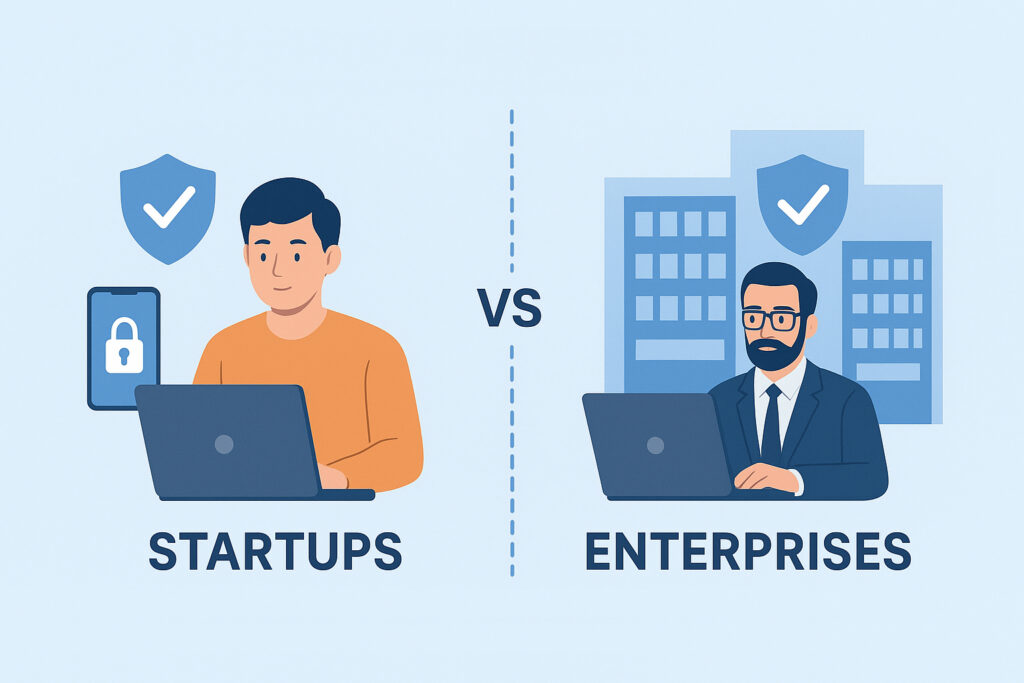
When I first started consulting for both startups and large enterprises, I made the mistake of thinking endpoint security was basically the same for everyone. Just install some antivirus software and call it a day, right? Wrong. I learned this the hard way when a 15-person startup rejected my enterprise-focused security proposal because it would have consumed nearly a third of their entire IT budget.
The truth is, protecting employee devices from malware and cyber threats looks dramatically different depending on whether you’re securing 20 laptops or 2,000. And understanding these differences isn’t just academic—it directly impacts your security effectiveness, budget, and team productivity.
Budget Reality: The Elephant in the Room
Let’s start with the most obvious difference: money. Enterprises typically allocate 5-8% of their IT budget to security, which might translate to hundreds of thousands or even millions annually. Startups? They’re often working with whatever’s left after paying for core infrastructure and salaries.
This isn’t about being cheap—it’s about survival. A startup with 25 employees can’t justify spending €50 per device monthly on enterprise-grade endpoint protection when their runway is measured in months. They need solutions that provide solid protection at €10-20 per endpoint. Enterprises, meanwhile, can afford comprehensive suites that include advanced threat detection, dedicated security operations center (SOC) integration, and 24/7 support.
Complexity vs. Simplicity
Here’s where things get interesting. Enterprise endpoint security solutions are feature-rich, often overwhelmingly so. They offer granular policy controls, detailed compliance reporting, integration with SIEM systems, and countless configuration options. You practically need a dedicated security team just to manage them.
Startups need the opposite: plug-and-play simplicity. When your “IT team” is actually your CTO wearing multiple hats, you don’t have time to spend hours configuring security policies. You need real-time monitoring and automatic updates that just work out of the box.
I remember working with a fintech startup where the founder told me, “I need security that my developer can set up during lunch break.” That’s the startup mentality—effective protection without the complexity overhead.
Compliance Requirements
Enterprises often operate in heavily regulated industries where compliance isn’t optional. They need endpoint security that generates audit trails, proves GDPR compliance, meets ISO 27001 standards, and satisfies industry-specific requirements like HIPAA or PCI DSS.
Startups typically face lighter compliance burdens initially, though this changes as they grow. A seed-stage SaaS company might only need basic data protection, while a Series B healthtech startup suddenly needs HIPAA compliance. The key difference? Enterprises build compliance into their security from day one; startups often add it incrementally.
Threat Landscape and Risk Profile
Enterprises are high-value targets. Cybercriminals know that breaching a large organization can yield massive payouts, whether through ransomware, data theft, or corporate espionage. Enterprise endpoint security therefore focuses heavily on advanced persistent threats (APTs), zero-day exploits, and sophisticated attack vectors.
Startups face different threats. They’re usually targeted by opportunistic attacks—phishing campaigns, commodity malware, and credential stuffing. Their biggest risk often isn’t a nation-state actor but an employee clicking a malicious link or using “password123” for their work account.
Scalability Considerations
When an enterprise adds 500 new employees, their endpoint security needs to scale seamlessly. They require centralized management dashboards, automated deployment across multiple offices and countries, and integration with existing identity management systems.
Startups scale differently. They might double their headcount in six months, then stay flat for a year. They need security solutions that won’t break the bank at 15 employees but can grow to 150 without requiring a complete platform change. Flexibility matters more than handling massive scale.
Response and Support Expectations
Enterprises expect—and pay for—immediate support. If endpoint protection fails during business hours, they need a dedicated account manager on the phone within minutes. They often have SLAs guaranteeing specific response times.
Startups typically work with standard support channels: email tickets, knowledge bases, and maybe chat support during business hours. And honestly? That’s usually fine. When you’re a 30-person company, you can often troubleshoot issues yourself or wait a few hours for support without catastrophic consequences.
Finding the Right Fit
The biggest mistake I see companies make is choosing endpoint security based on what they think they should have rather than what they actually need. A startup doesn’t need to emulate enterprise security—they need protection that fits their reality.
For startups, prioritize: real-time malware protection, automatic updates, multi-device support (computers and phones), and simple deployment. Look for transparent pricing without hidden costs.
For enterprises, focus on: comprehensive threat detection, compliance reporting, centralized management, integration capabilities, and dedicated support. Yes, it costs more, but the cost of a breach is exponentially higher.
Common Misconceptions
Myth: Startups don’t need serious endpoint security because they’re too small to be targeted.
Reality: Automated attacks don’t discriminate by company size. Ransomware doesn’t care if you have 20 employees or 2,000.
Myth: Enterprise solutions are always better.
Reality: They’re more comprehensive, but complexity without proper management creates security gaps. An over-engineered solution you can’t properly configure is worse than a simpler one you actually use correctly.
Myth: Free antivirus is sufficient for startups.
Reality: Free tools lack centralized management, real-time monitoring, and support—exactly what you need when protecting employee devices remotely.
The Bottom Line
Endpoint security isn’t one-size-fits-all. Startups need affordable, simple, effective protection that grows with them. Enterprises need comprehensive, scalable solutions that satisfy complex compliance and risk management requirements.
The good news? Understanding these differences helps you choose security that actually protects your organization without wasting resources on features you’ll never use or skimping on protection you desperately need. Whether you’re protecting 20 devices or 20,000, the right endpoint security exists—you just need to be honest about which category you’re actually in.