I still remember the Monday morning when one of our client’s employees clicked on what looked like a legitimate invoice email. Within minutes, ransomware had encrypted half their file server. The IT team scrambled, but the damage was done. That incident could have been prevented with proper endpoint protection, and it’s a scenario playing out in businesses every single day.
Understanding Endpoint Protection
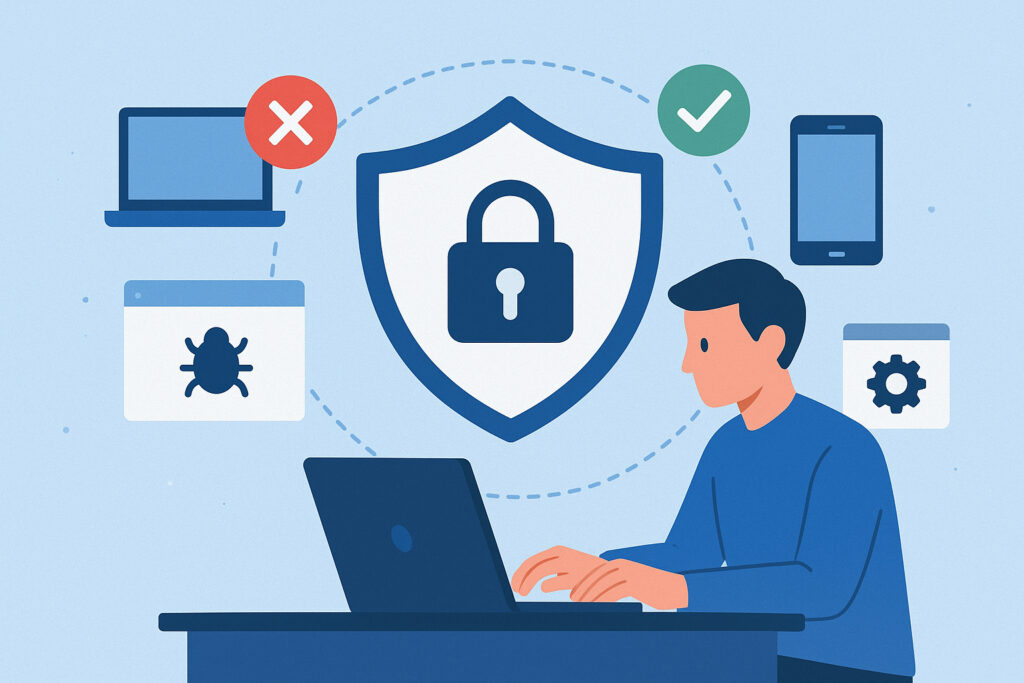
Endpoint protection is essentially a security system that guards every device connected to your company network. Think of endpoints as any device your employees use to access company data – laptops, desktop computers, smartphones, and tablets. Each one is a potential entry point for cyber threats.
Unlike traditional antivirus software that just scans for known viruses, modern endpoint protection works more like a smart security guard. It monitors everything happening on your devices in real-time, looks for suspicious behavior, and can automatically block threats before they cause damage. It’s not just about catching malware anymore – it’s about preventing attacks from happening in the first place.
Why Traditional Antivirus Isn’t Enough
Here’s the thing: cyber attacks have become incredibly sophisticated. Hackers aren’t just sending obvious viruses anymore. They’re using social engineering, zero-day exploits, and ransomware that can slip past basic antivirus programs. Traditional antivirus relies on recognizing known threats from a database, but what about new threats that haven’t been catalogued yet?
Endpoint protection takes a different approach. It watches how programs behave. If something starts acting suspiciously – like suddenly trying to encrypt all your files or sending data to an unknown server – the system catches it and stops it. This behavioral analysis is crucial because it can stop brand new threats that no one has seen before.
The Real Cost of a Breach
Small and medium-sized businesses often think they’re too small to be targeted. That’s a dangerous misconception. Hackers actually prefer smaller companies because they know security is often weaker. A single breach can cost tens of thousands in recovery, lost productivity, and customer trust. I’ve seen companies lose major contracts simply because a client found out they’d been hacked.
Beyond the immediate financial hit, there’s the regulatory side. Depending on your industry and location, you might face fines for not adequately protecting customer data. GDPR in Europe, for instance, doesn’t care how big your company is – if you mishandle data, the penalties can be severe.
What Good Endpoint Protection Actually Does
Modern endpoint protection gives you several layers of defense. Real-time monitoring means threats are caught as they happen, not hours or days later during a scheduled scan. Automatic updates ensure your protection stays current without your IT team having to manually push updates to every device.
Centralized management is another big advantage. Instead of trying to manage security on each device individually, you get a single dashboard showing the security status of every endpoint. If an employee’s laptop in a coffee shop starts showing suspicious activity, you’ll know immediately.
Many solutions also include features like device control, which lets you manage what USB drives or external devices can connect to company computers. It sounds minor, but infected USB sticks are still a surprisingly common way malware spreads.
Making It Work for Your Business
The good news is that endpoint protection has become much more accessible. You don’t need a massive IT department to implement it. Cloud-based solutions can be set up quickly, and they scale easily as your business grows.
The key is not to wait until after an incident happens. Every day without proper endpoint protection is a day your business is vulnerable. Your employees’ devices are the front line of your cybersecurity defense, and protecting them should be a basic part of doing business in the digital age.