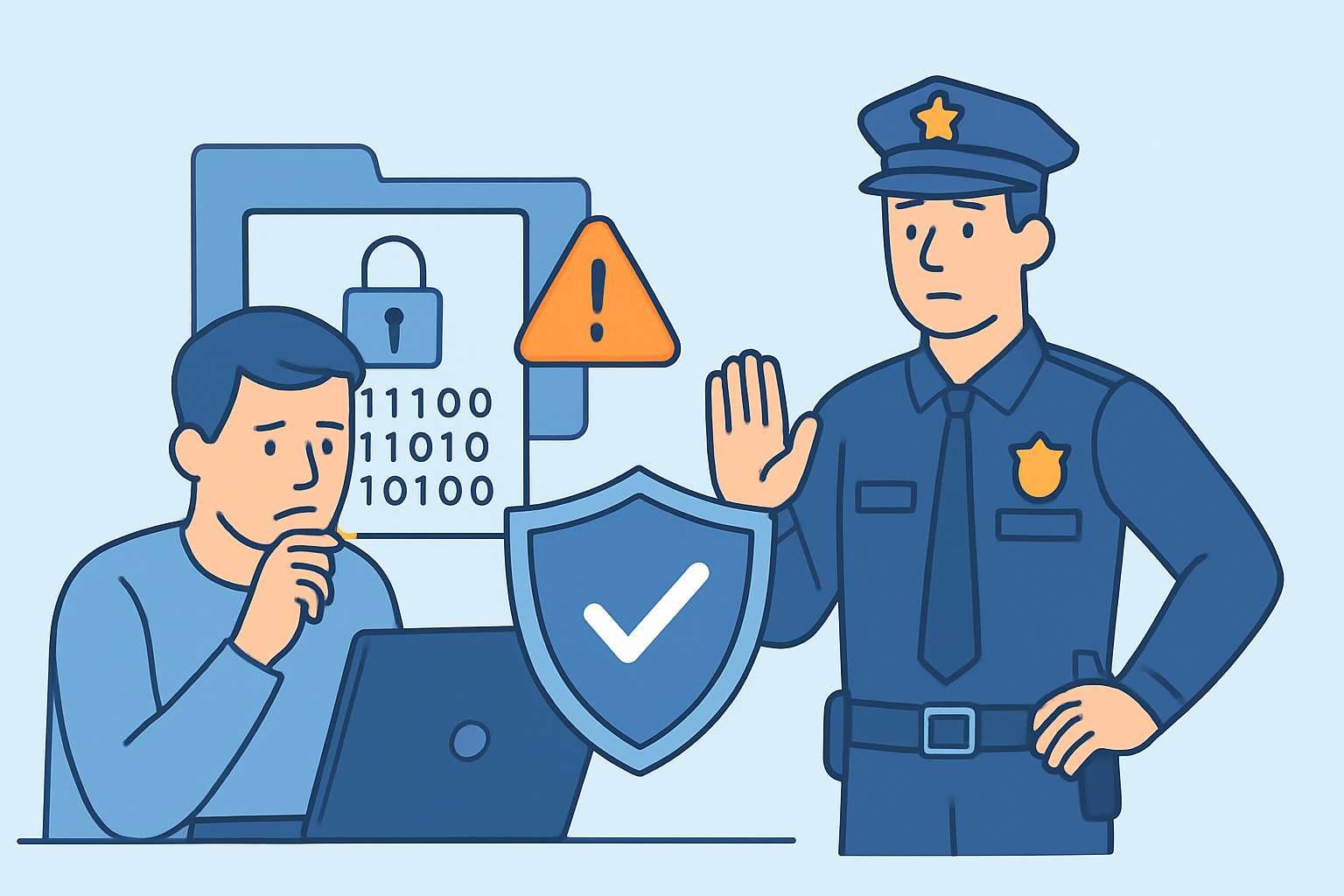
Security teams discovering a data leak often face a split-second dilemma that has nothing to do with technology: should this go to the police, the FBI, Europol, or a national CERT – and if so, when? The technical response usually starts within minutes, but the decision to involve law enforcement is frequently delayed, mishandled, or skipped entirely, sometimes to the organization’s later regret. This article walks through exactly when law enforcement involvement makes sense after a data leak, what to expect from the process, and how to avoid the most common mistakes.
Why This Decision Gets Delayed So Often
In the first hours after a leak is confirmed, most incident response teams are focused on containment: rotating credentials, isolating affected systems, and figuring out the blast radius. Legal and law enforcement questions tend to get pushed to “later” – which sometimes means never, or means calling in an agency three weeks after the trail has gone cold.
There’s also a widespread myth worth busting here: many IT managers assume law enforcement involvement is only appropriate for large-scale breaches involving thousands of records. In practice, agencies like the FBI’s IC3, Europol’s EC3, or national police cybercrime units regularly work smaller cases, especially when there’s evidence of an active criminal operation, extortion, or a repeat offender targeting multiple companies. Size is not the deciding factor – criminal intent and evidentiary value are.
Situations That Clearly Warrant a Report
Not every exposed spreadsheet needs a police report. But certain patterns should trigger an immediate call, not a “let’s discuss it next week” conversation.
Active extortion or ransom demands. If attackers are demanding payment, threatening to publish stolen data, or have already begun leaking samples to pressure the organization, this is now a criminal extortion case. Law enforcement should be looped in before any negotiation begins, even if the company ultimately decides not to pay.
Evidence of unauthorized system access. A leak caused by a misconfigured S3 bucket is different from a leak caused by an attacker who broke into internal systems. The latter is a computer intrusion crime in most jurisdictions, and evidence preservation matters from the first hour.
Insider theft with clear criminal intent. When log data shows an employee or contractor exfiltrated data deliberately – for financial gain, to sell to a competitor, or to hand to a hostile third party – this typically crosses from an HR matter into a criminal one.
Data appearing for sale on criminal marketplaces. When stolen credentials, customer PII, or source code show up being actively sold on forums or Telegram channels, this is often tied to organized cybercrime groups that law enforcement is already tracking. Reporting can help connect your incident to a broader investigation.
Confirmed identity theft or financial fraud tied to the leak. If customers or employees report fraudulent charges or new-account fraud that traces back to your leaked data, this shifts the incident into territory where regulators and police both expect a report.
Situations Where It’s Less Clear-Cut
Plenty of leaks fall into a gray zone. An employee accidentally shares a file publicly, a third-party vendor misconfigures a database, or old credentials surface in a historical breach dump unrelated to any current attack. These cases don’t always need a police report, but they still need documentation and a legal review, because regulatory notification obligations can apply even without a criminal angle. It helps to work from a consistent framework for triage – see how to classify leaks by severity and business impact – so the decision isn’t made ad hoc under pressure each time.
What Actually Happens When You Report
Organizations that have never filed a cybercrime report often overestimate how disruptive it will be. In most cases:
Step 1: An initial report is filed, typically through IC3 in the US, Europol’s reporting channels in the EU, or a national cybercrime unit. This usually takes under an hour and doesn’t require a finished forensic report.
Step 2: A case number is assigned. This matters more than it sounds – it becomes useful for insurance claims, regulatory filings, and any later civil litigation.
Step 3: An investigator may request logs, indicators of compromise, or a point of contact from the security team. This is where having clean, timestamped evidence from the start pays off.
Step 4: Depending on jurisdiction and case load, active investigation may take weeks or months. Companies should not expect immediate recovery of stolen data or arrests – the value of reporting is often long-term and cumulative, contributing to broader takedowns.
A practical lesson from organizations that have been through this: bring in legal counsel and law enforcement contacts before an incident happens, not during one. Many companies waste the first critical hours simply figuring out who to call.
Law Enforcement Involvement Doesn’t Replace Regulatory Notification
This is a distinction that trips up a lot of first-time incident responders. Reporting to police or the FBI is a separate track from notifying data protection regulators, affected customers, or supervisory authorities under frameworks like GDPR. The two obligations run in parallel, and one does not satisfy the other. Understanding regulatory reporting timelines and who you must notify and when is essential, since some jurisdictions require notification within 72 hours regardless of whether a criminal case is opened.
Similarly, if customer data is involved, the legal obligations extend well beyond the police report itself – see customer data exposure legal obligations and response plans for how these tracks intersect.
Building the Decision Into Your Incident Response Plan
The organizations that handle this well have already answered these questions before an incident occurs: who has authority to file a police report, which agency to contact based on jurisdiction, what evidence needs to be preserved (and how), and who communicates with investigators once a case is opened. Baking this into a documented incident response playbook for data leak discoveries removes the guesswork exactly when speed and clarity matter most.
Frequently Asked Questions
Does reporting to law enforcement mean the incident becomes public?
Not automatically. Initial reports are typically confidential and used for investigative purposes. Public disclosure obligations, if any, come from separate regulatory or contractual requirements, not from the act of filing a police report.
Will filing a report slow down our recovery efforts?
No – technical remediation and law enforcement reporting can and should happen in parallel. Preserving evidence (logs, timestamps, affected system images) alongside containment work is usually enough; it rarely requires pausing recovery.
What if we’re not sure whether a leak was criminal or accidental?
When in doubt, file a report anyway. Agencies routinely receive reports that turn out to be accidental exposure rather than intrusion, and having the case on record costs little but can matter significantly later if new evidence emerges.
Knowing when to pick up the phone to law enforcement shouldn’t be improvised in the middle of a crisis. Organizations that treat this as a pre-planned decision – with clear triggers, documented contacts, and evidence-preservation steps ready to go – consistently handle leaks with less chaos and better long-term outcomes than those figuring it out for the first time under pressure.